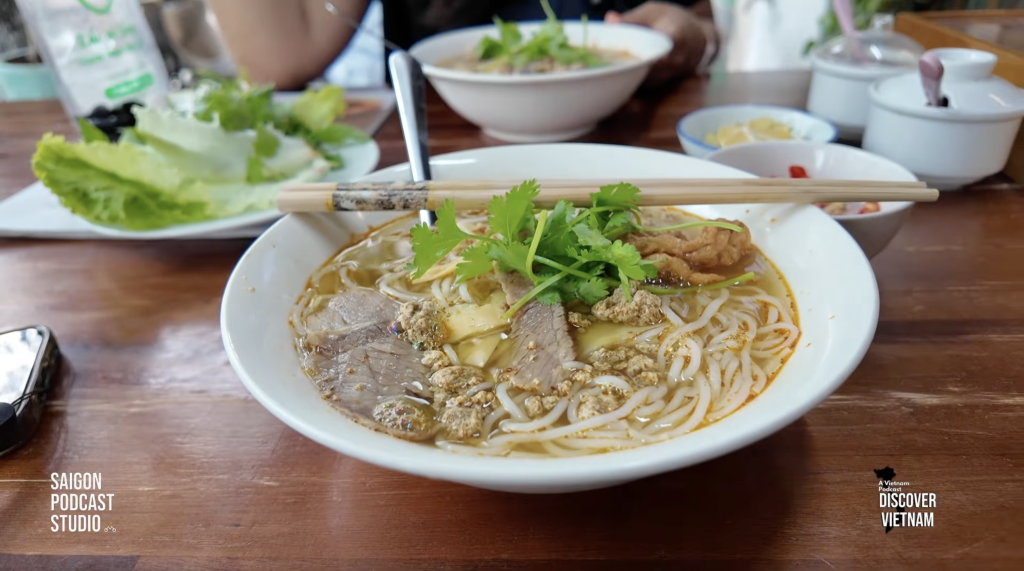
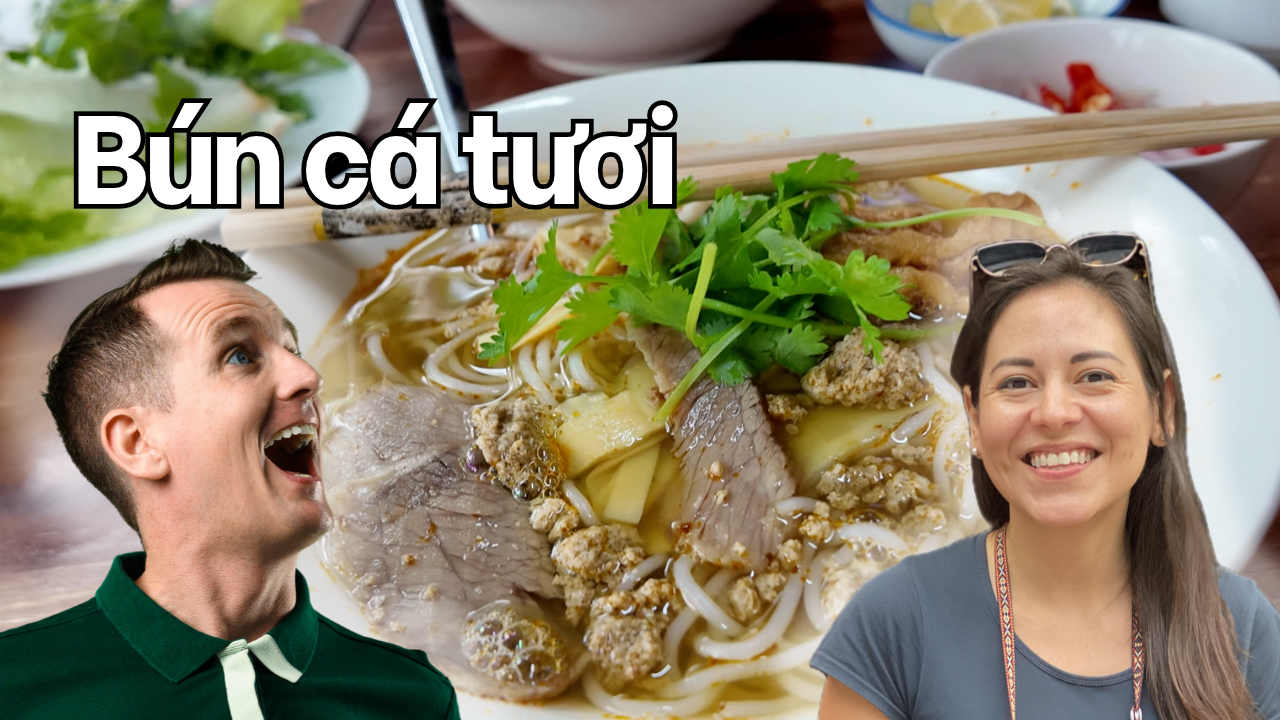
Episode seven of Lunch Walks is an extra special one — I’m joined by my wife, Adrie, and instead of the usual walk around the block from Saigon Podcast Studio, we’re in Quy Nhơn, a coastal city in central Vietnam that we flew up to at the tail end of our trip.
Today’s dish is “bún cá tươi”, which mean noodles with fresh fish. We’d had it once before, years earlier, on Lý Sơn Island off Vietnam’s central coast, and it had stuck with us as one of those simple, coastal dishes that’s hard to find once you’re back inland. So when we spotted a restaurant literally called “Fresh Bún Cá” in Quy Nhơn, it felt like the easiest win of the whole trip.
What Bún Cá Tươi Actually Is
Bún cá tươi translates directly: bún is the thin rice vermicelli noodle found across Vietnamese cooking, cá means fish, and tươi means fresh. Put together, it describes a noodle soup built around fresh fish rather than dried, salted, or preserved fish — an important distinction in a country where fish is prepared dozens of different ways depending on how recently it came out of the water.
It’s worth clearing up a mix-up I made myself while ordering: bún cá is not the same dish as bánh canh, even though the names can get tangled on the tongue. Bánh canh uses thick, chewy noodles made from rice flour mixed with tapioca starch, closer in texture to a Japanese udon. Bún cá tươi, by contrast, uses the same thin, round rice vermicelli you’d find in bún bò or bún riêu — delicate strands that let the fish and broth do the talking rather than competing with a heavy noodle.
As a dish, bún cá tươi belongs to the broader family of Vietnamese noodle soups built around a “catch of the day” mentality. It’s most at home in coastal towns, river delta regions, and islands, anywhere fresh fish is a daily reality rather than a special occasion.
Regional Variations
Bún cá tươi isn’t one fixed recipe — it changes shape depending on where along Vietnam’s coastline you order it. In the Mekong Delta, bún cá is often made with snakehead fish (cá lóc), a freshwater fish common to the region’s rivers and canals. Along the central coast — in places like Nha Trang, Phú Quốc, and Quy Nhơn, where we were — it’s more likely to use saltwater fish such as mackerel (cá thu) or other local catch, depending on the season and what came in that morning.
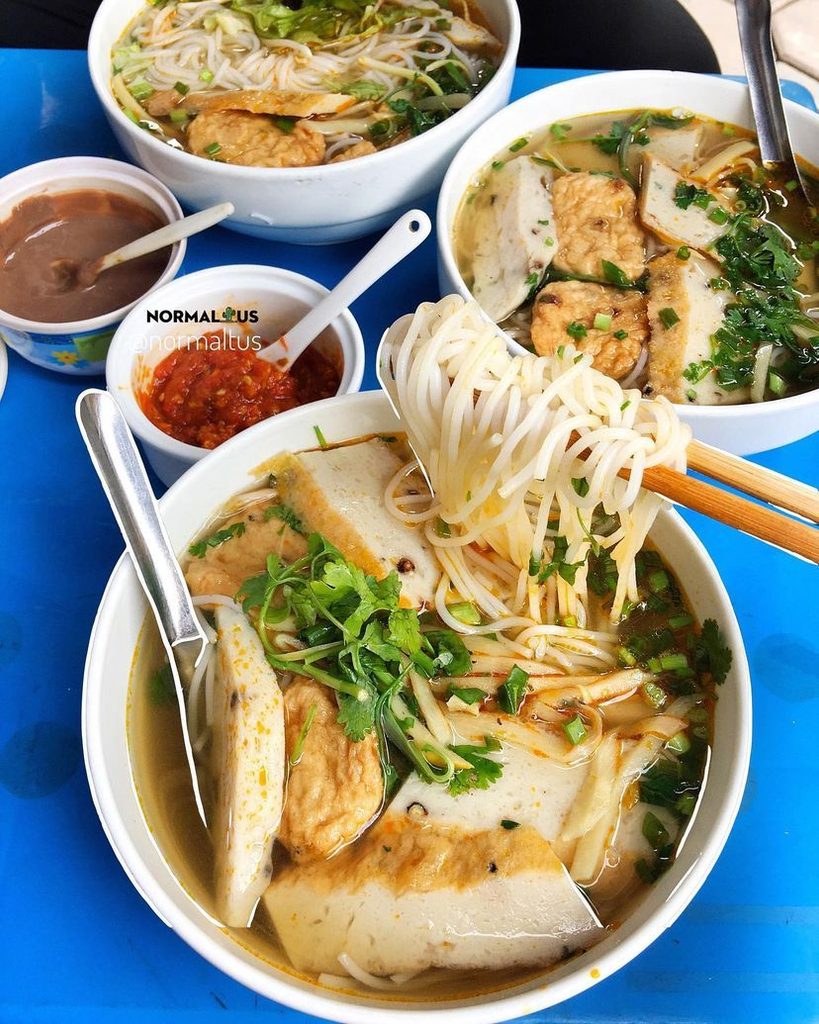
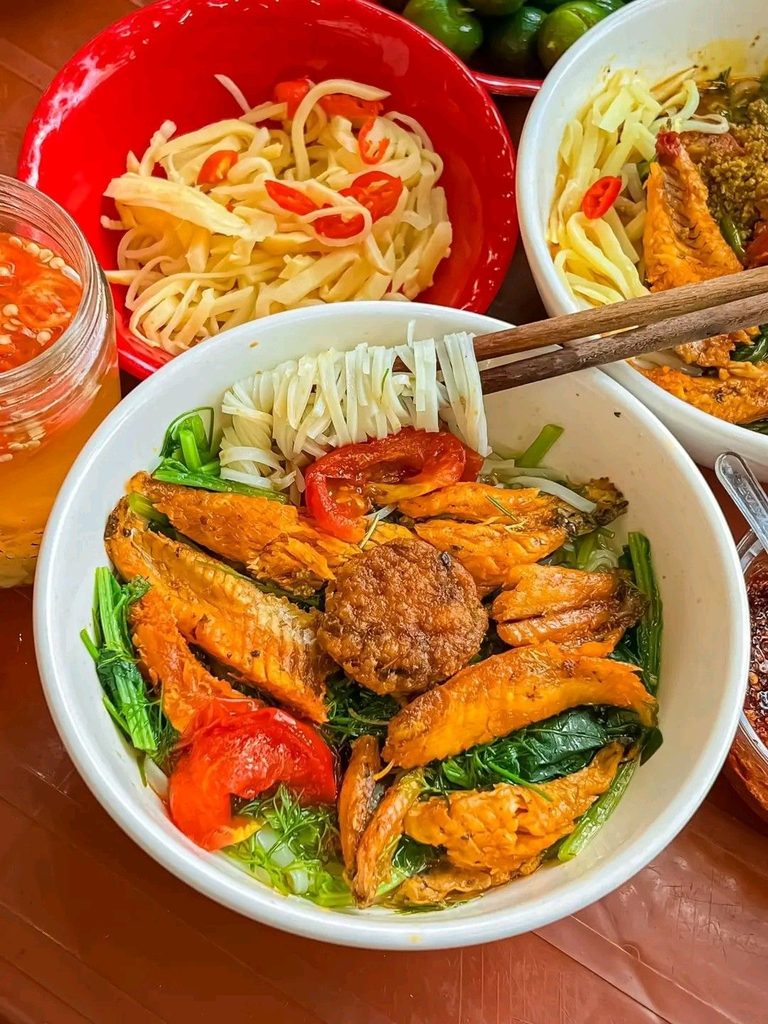
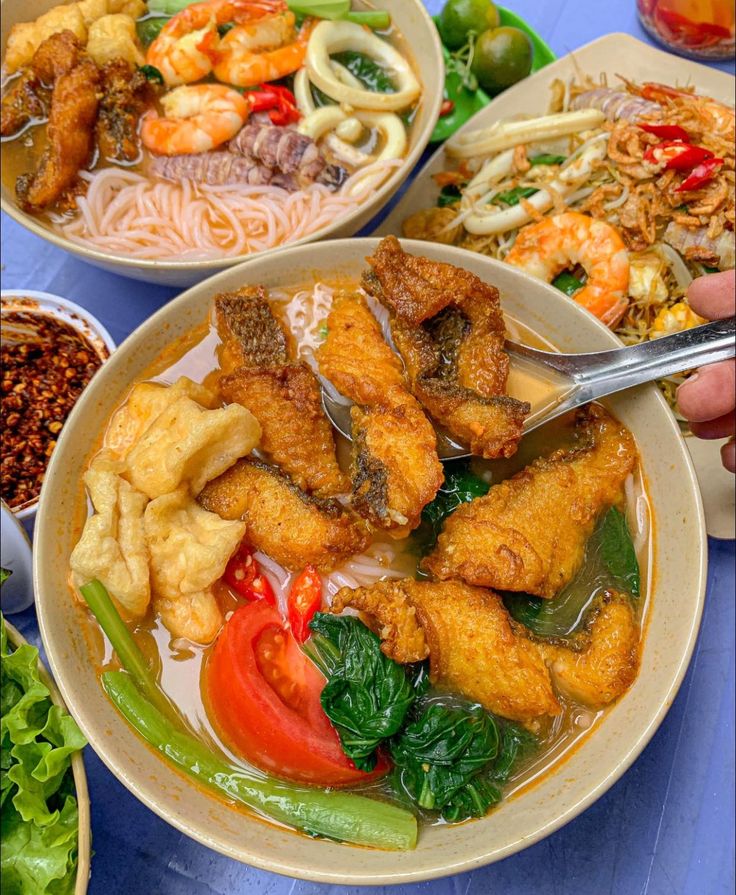
The broth style shifts regionally too. Some versions are kept clear and light, letting the fish flavor speak for itself. Others, particularly further south, lean into a tomato-based broth that turns the soup a warm reddish color and adds natural sweetness and acidity. There’s no single “correct” bún cá tươi — it’s a dish that adapts to its coastline, which is part of what makes it worth trying in more than one city if you get the chance.
The Broth
What ties all these regional versions together is the broth’s foundation: fish bones and fish stock, simmered to stay light rather than heavy or oily. Unlike the hours-long, bone-heavy broths behind phở or bún bò, a good bún cá tươi broth is built for freshness and clarity rather than deep, slow-cooked richness. Tomato is a common addition across many versions, both for color and for a gentle sweetness that balances the fish.
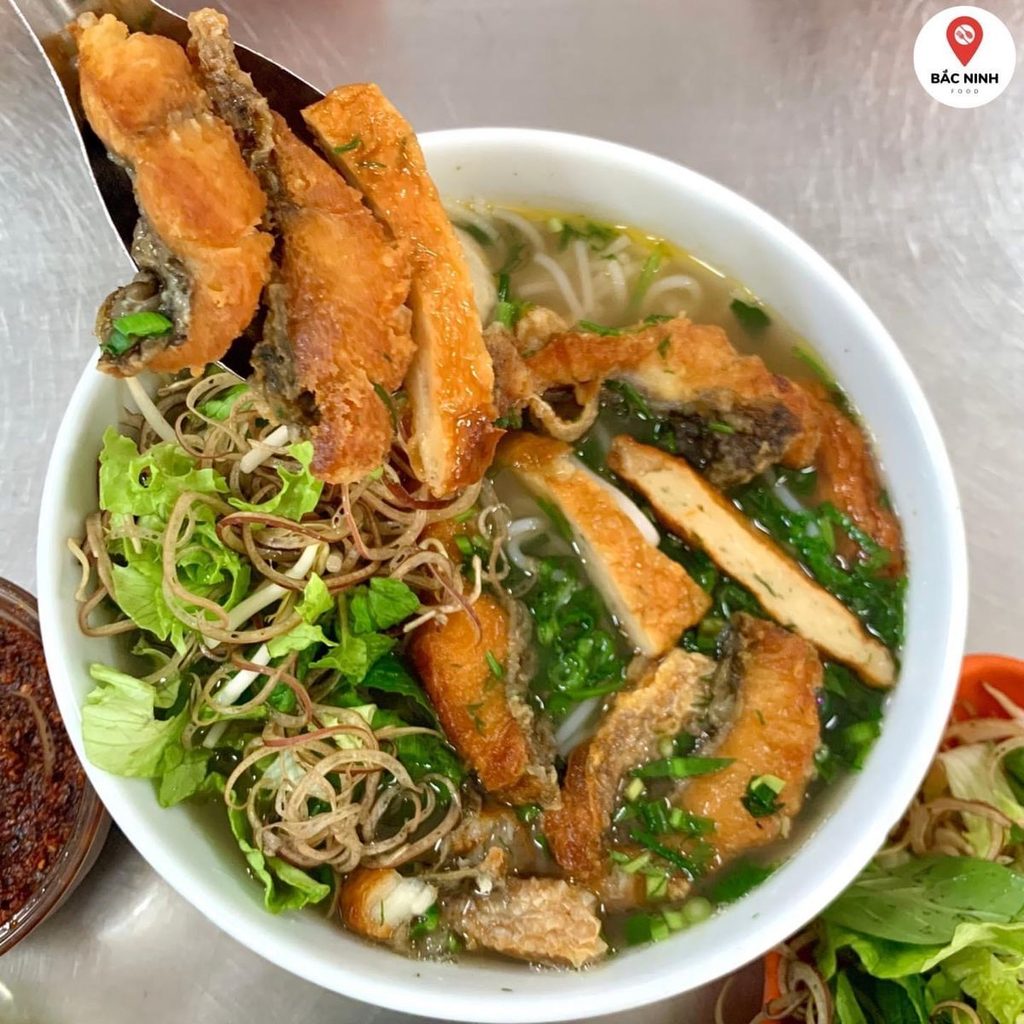
One detail that stood out to us on this particular trip was the dill served alongside the soup — a herb you don’t typically see with most Vietnamese noodle soups, but one that pairs naturally with fish. Dill’s slightly grassy, anise-like flavor is more associated with northern Vietnamese dishes like chả cá Lã Vọng, so its appearance here is a nice reminder of how much regional crossover happens in coastal Vietnamese cooking.
The Fish and the Toppings
A proper bowl of bún cá tươi usually includes a mix of fresh fish fillets and chả cá — fish cake made from pounded fish paste, seasoned and then fried or steamed until firm. It’s common for a bowl to include two different styles of chả cá, one lighter and more delicate, one with a stronger, more distinctly “fishy” flavor, giving the dish some textural and flavor contrast beyond just the broth and noodles.
Bamboo shoots are a frequent addition, adding a slight crunch and earthy bitterness that cuts through the richness of the fish. In coastal towns, crab meat often finds its way into the bowl as well, especially when it’s in season locally. At the table, it’s standard to be given pickled onions and chilies, a chili sauce for anyone wanting more heat, and a wedge of lime — the same customization ritual found across nearly every Vietnamese noodle soup, bún cá tươi included.
A Note on What We Actually Ate: Thố Đại Dương
Since the restaurant was out of bún cá tươi that day, we ended up ordering what the staff described as thố đại dương — an “ocean pot,” loaded with a mix of fish, crab, and other seafood in a shared pot rather than individual noodle bowls. It’s a related dish rather than a substitute: heartier, more mixed, and built around whatever seafood is freshest that day, rather than the single clean broth-and-fish combination that defines bún cá tươi.
That substitution ended up being a useful reminder about coastal Vietnamese cooking in general: these dishes are flexible by nature, shaped by what actually came off the boats that morning. A restaurant literally named after bún cá tươi running out of it isn’t really a letdown — it’s the dish’s own logic playing out in real time.