
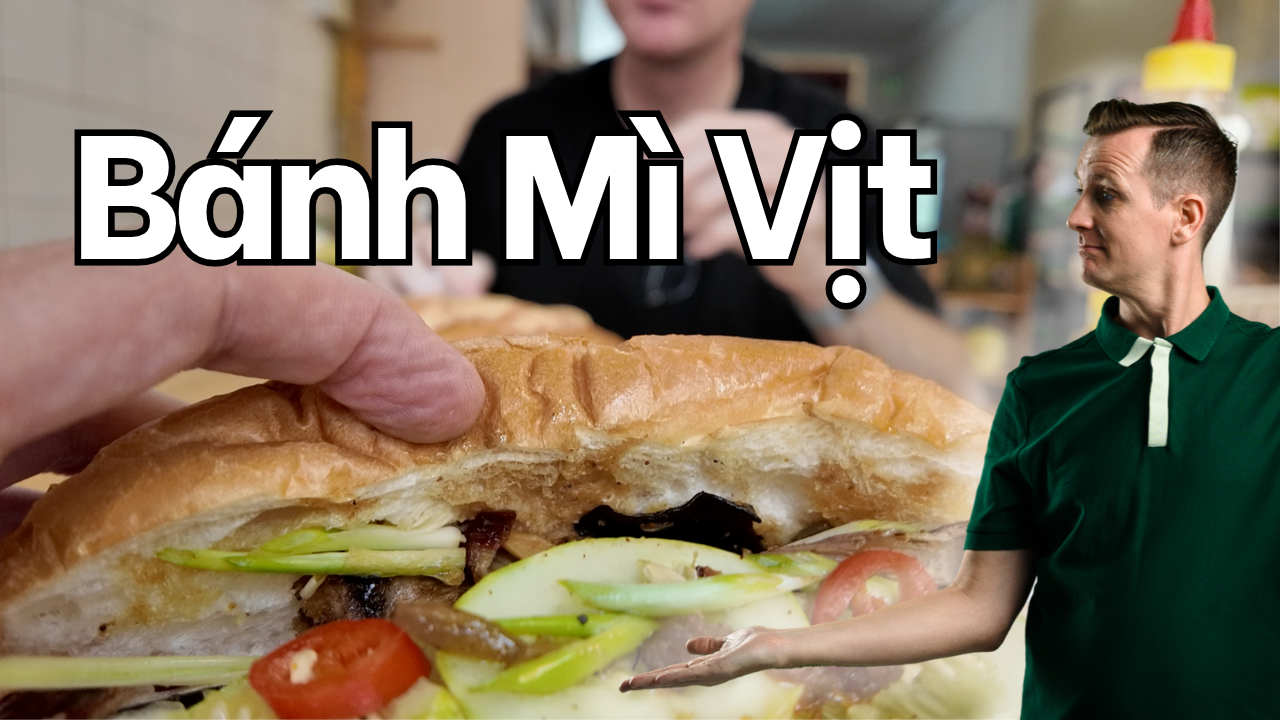
For this lunch walk I’m joined by my friend James Green, who’s originally from London and has lived in Vietnam for eight and a half years, long enough that he actually lives in this neighborhood himself, rather than just visiting it the way I usually do. James runs Lucky Vodka, a locally produced vodka company based here in Ho Chi Minh City, and when I messaged him about coming on a lunch walk, he was in.
The Dish: Bánh Mì Vịt Quay
Clearing Up the Name First
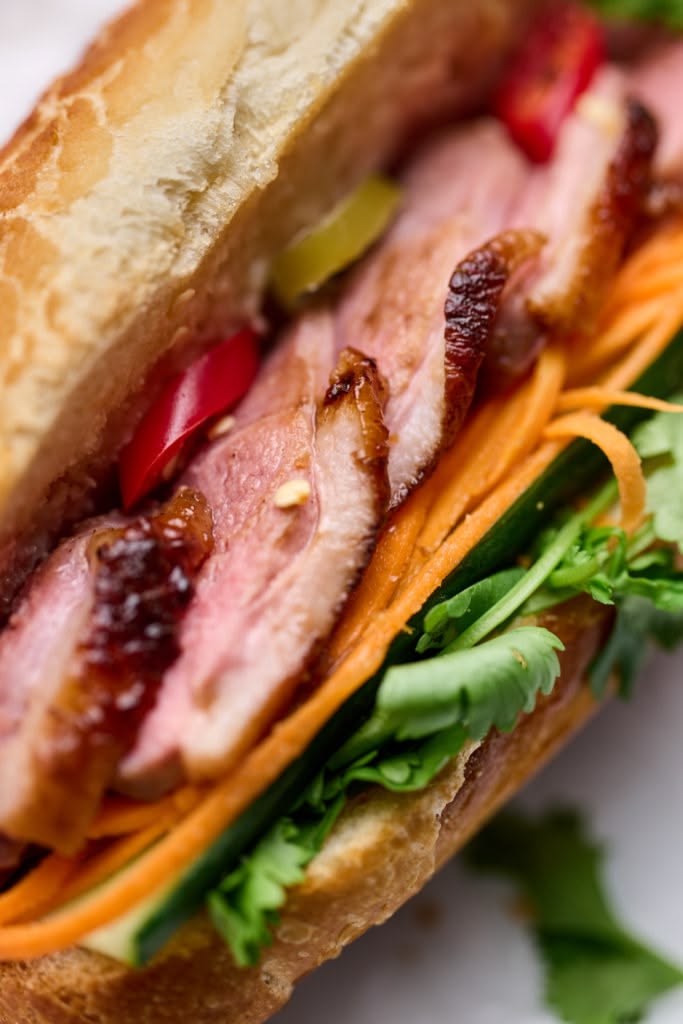
If you know “bánh mì” as the stuffed baguette sandwich sold on nearly every street corner in Vietnam, it’s worth resetting that expectation here. Bánh mì literally just means bread – the sandwich is one specific, famous application of the word, not the word’s only meaning. In bánh mì vịt quay, the bread is served alongside roast duck (vịt quay) rather than built into a sandwich. You tear off pieces of baguette and use them to scoop up duck, fat, and sauce, rather than biting into an assembled roll.
Where the Dish Actually Comes From
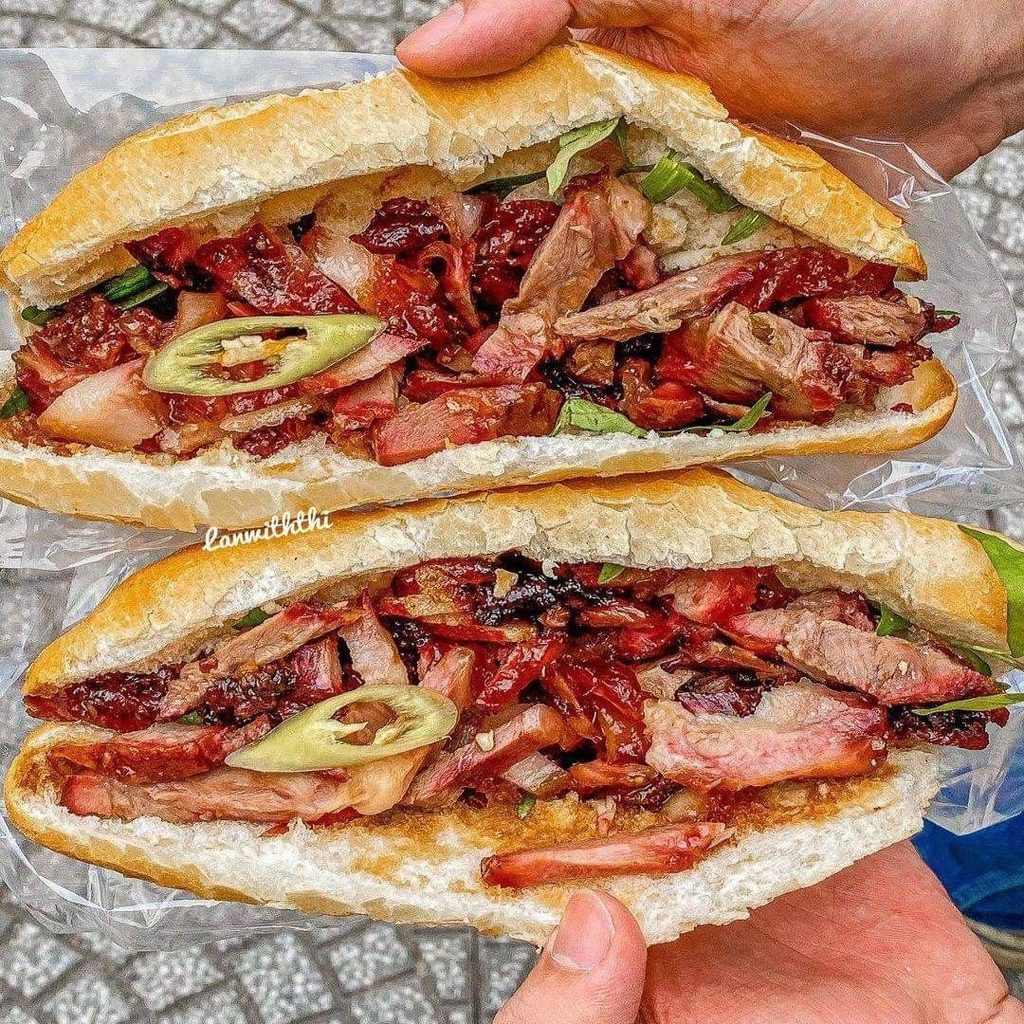
Vịt quay belongs to a much older Cantonese culinary tradition known as siu mei (燒味), the roasted and barbecued meat category that also includes char siu (roast pork) and siu yuk (crispy pork belly) -the glistening rows of hanging meat you see in the windows of Cantonese restaurants from Hong Kong to Chinatowns around the world. This tradition arrived in Vietnam with Cantonese immigrants, who settled heavily in what’s now Chợ Lớn and other pockets of Chinese-Vietnamese community across Saigon, including, as it turns out, this particular stretch of District 1. The shop we visited is a direct, living example of that lineage, not a historical reenactment, but a business that’s been quietly doing the same thing since 1938, three generations of the same family later.
How the Duck Is Actually Roasted
Cantonese-style roast duck is a genuinely technical process. The duck is typically cleaned, seasoned inside the cavity with a mix of aromatics, commonly five-spice powder, star anise, garlic, and ginger, then air-dried, sometimes for hours, to help the skin crisp properly during roasting rather than steaming in its own moisture. It’s roasted whole, often hung vertically in a specialized oven, and basted or lacquered partway through with a glaze usually built from maltose syrup, which is what gives the finished skin its deep mahogany color and glass-like crackle.
What Makes the Result So Good
The combination that makes siu mei duck so addictive is the contrast built into every piece: skin that shatters when you bite into it, a thin layer of rendered fat just beneath, and dark, juicy meat underneath that. Duck holds up to this kind of high-heat roasting better than leaner meats like chicken breast because its higher fat content bastes the meat from the inside as it cooks, which is a big part of why duck, rather than chicken, is the centerpiece of most Cantonese roast meat shops. The flavor that comes out the other end is simultaneously salty, sweet, and savory, with the glaze adding a caramelized edge on top of the meat’s own richness.
The Sauce – and the Role the Bread Plays
Alongside the duck came a dark, rich sauce that neither of us could fully place at the table, beyond agreeing it tasted like it was built from the pan drippings and rendered duck fat, likely finished with a touch of soy and sugar to round it out. This is standard practice in Cantonese roast meat cookery: the drippings collected underneath the roasting duck are too good to waste, so they’re reduced and served as a dipping sauce or drizzle. This is where the bread does its real work – not as a sandwich casing, but as a tool for mopping up sauce and fat, the same way you might use bread with a good stew. It’s a simple pairing, but it’s exactly why the dish works: rich, fatty duck balanced by plain, absorbent bread.
More Than Just Duck
A shop like this rarely serves just one thing, and ours was no exception. Alongside the duck, we also ordered Chinese sausage (lạp xưởng), roasted pork, and a shrimp-and-pork sausage variation the owner mentioned was made with a roughly 70/30 ratio of shrimp to pork, seasoned with white pepper. There was also tripe on the menu – ordered once by curiosity, firmly filed under “never again” by at least one of us. All of this reflects how Cantonese roast meat shops typically operate: a small, rotating lineup of roasted and barbecued proteins, sold by weight, meant to be mixed and matched rather than ordered as single, fixed dishes.
Why Duck Bánh Mì Matters in Vietnam Specifically
Bánh mì vịt quay is a good reminder that Vietnamese food isn’t a single, self-contained tradition – it’s shaped by centuries of exchange, particularly with Chinese immigrant communities who brought their own techniques and simply adapted them to local ingredients, including Vietnamese bread. Dishes like this sit in a slightly different category from the more “classically Vietnamese” dishes covered in earlier episodes of this series, like phở or bún bò – they’re Chinese-Vietnamese, a genuinely distinct culinary thread that runs through cities like Saigon wherever Cantonese and Teochew communities settled.
What makes a shop like the one James and I visited particularly special isn’t just the food – it’s the continuity. A business run by the same family since 1938, still speaking Cantonese at home, still roasting duck the same way, isn’t a nostalgic recreation of the past the way a brand-new café dressed up to look historic might be. It’s the real thing, quietly continuing exactly as it has for nearly ninety years.