
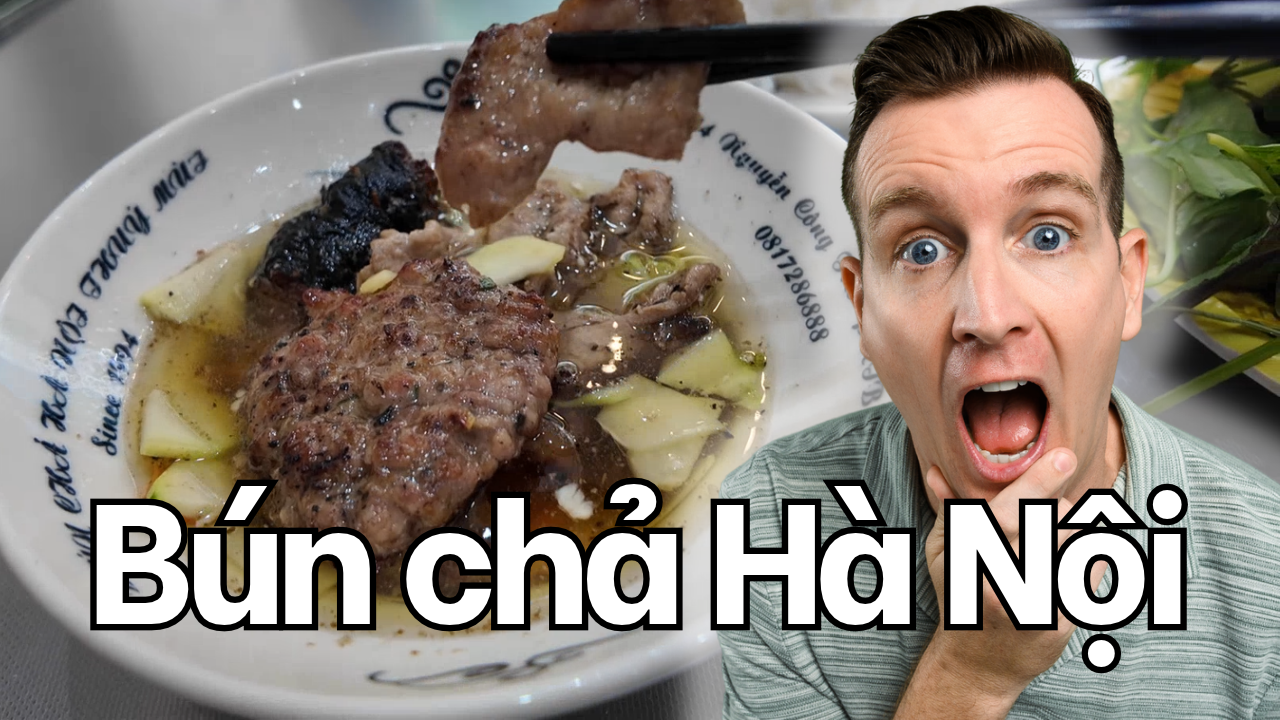
For lunch walk number 11, I didn’t have to go far. My bún chả spot is just around the corner from Saigon Podcast Studio, and I say this in pretty much every episode, but bún chả Hà Nội is one of my absolute favorites. I get so excited about it that I swore on camera, which I’m still a little embarrassed about.
When I sat down, I used Google Translate to ask the guy running the place how long it had been open. He told me it has been here since 1994, and his mum is the owner. That made the bowl taste even better. Here’s what I’ve learned about the dish itself.
What Is Bún Chả Hà Nội?
Bún chả is a classic northern Vietnamese dish, and it comes from Hanoi, which is why you’ll usually see “Hà Nội” in the name. In simple terms, it’s grilled pork served with rice vermicelli (bún), fresh herbs and a bowl of sweet, sour and salty dipping broth.
The part that surprised me when I first ate it is that the broth is not a soup. It’s essentially a dipping sauce, served in a bowl, with the grilled meat floating in it. You dip the noodles and herbs into it, or you drop them in and mix everything up. That’s why you don’t get a huge amount of broth, and why it feels so different from phở or the other noodle soups I’ve covered in this series.
In Hanoi, bún chả is traditionally a lunch dish. You’ll see smoke rising from grills on street corners around midday, and the smell alone can pull you off the road.
A Hanoi Classic
Bún chả is so closely tied to Hanoi that many people consider it the city’s signature lunch. It even got a moment on the world stage in 2016, when Barack Obama and Anthony Bourdain shared a table over bún chả at a small restaurant in Hanoi. After that, tourists started lining up for it, but locals have been eating it for generations as an everyday, affordable meal. That’s part of the charm for me. It’s a dish that’s famous, but it still tastes like street food.
What Goes Into It
The Grilled Pork
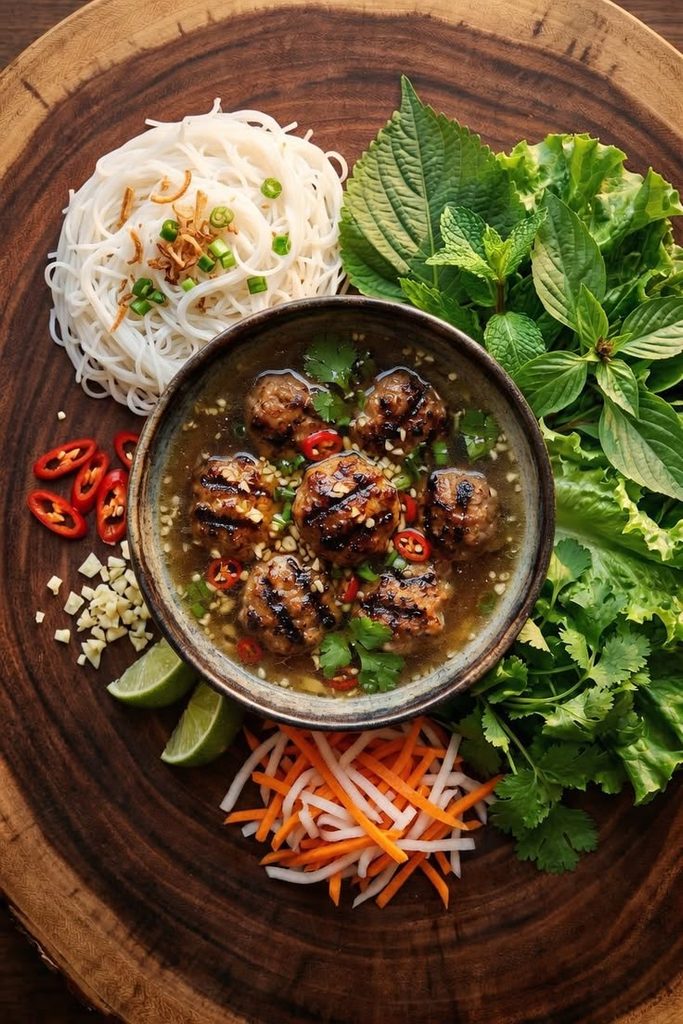
There are usually two kinds of pork in a bowl of bún chả. The first is chả viên, small patties of minced pork that look a lot like mini burgers. The second is thinly sliced pork, often pork belly, that has been marinated and grilled. Some places also add ribs, and the shop I went to does, which was a happy surprise for me.
The marinade is simple but powerful. It typically includes fish sauce, sugar, garlic, shallots and pepper, and the meat is grilled over charcoal. That’s where the smoky, slightly sweet, caramelized flavor comes from, and it’s the heart of the dish.
The Dipping Broth
The broth is called nước chấm, and I only recently learned what’s actually in it. I asked Tay at the studio what the broth was, and he looked at me like I was crazy and said it’s just fish sauce. It turns out it’s a bit more than that. The base is fish sauce mixed with water, sugar and either rice vinegar or lime juice, then finished with garlic and chili.
Floating in the broth, you’ll also find thin slices of pickled green papaya and carrot. They add a little crunch and a sharp, tangy note that cuts through the fatty pork. I couldn’t remember what they were at first, and I guessed cucumber, but it was papaya.
The Noodles and Fresh Herbs
The noodles are bún, which are round, soft rice vermicelli, usually served in a neat pile on a separate plate. Alongside them comes a big plate of fresh greens, normally lettuce, mint and bean sprouts. You can throw as much as you like into the bowl, which keeps each bite fresh and balances the richness of the grilled meat.
Optional Extras
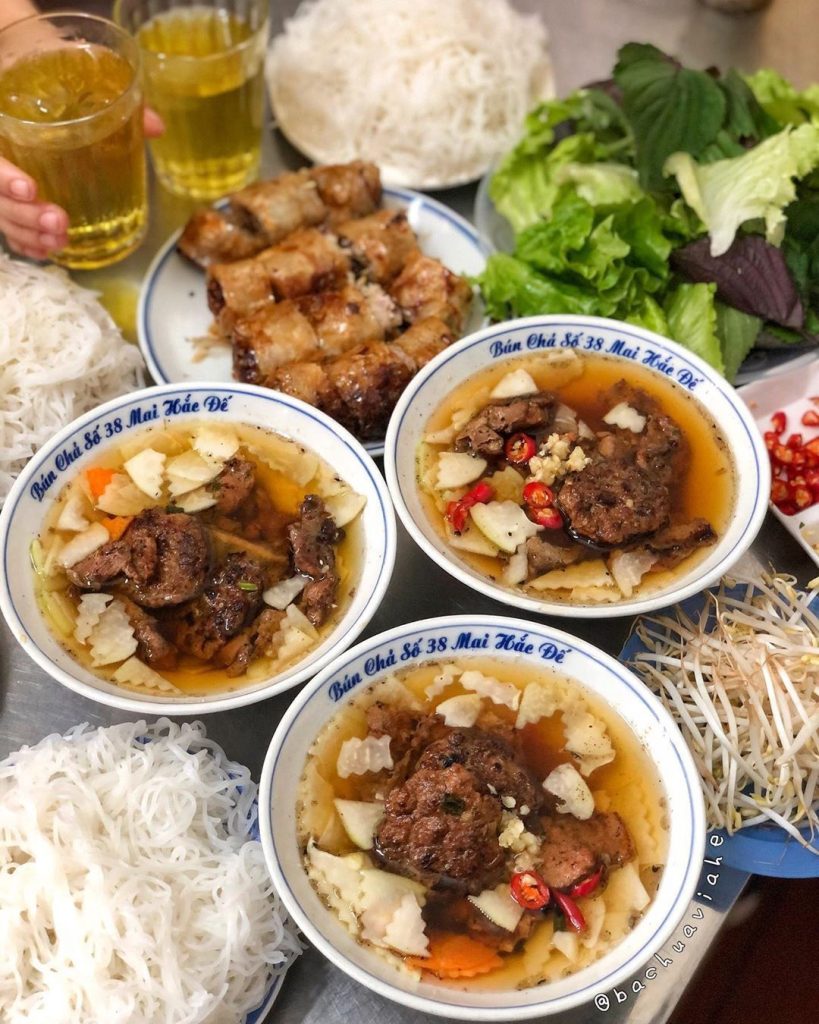
When I ordered, I also asked for bò lá lốt, which is minced beef wrapped in betel leaf and grilled. It’s a dish that deserves an episode of its own, but it’s a fantastic add-on, with a peppery aroma from the leaf. Some places also serve nem cua bể, which are crispy crab spring rolls, as a side.
What It Tastes Like
The best way I can describe bún chả is smoky, sweet, tangy and fresh, all at once. The pork is fatty and charred at the edges. The broth is light and sharp, with that vinegar-lime kick that I really love. The noodles are soft and neutral, and the herbs add a cool, green freshness. Every bite is slightly different depending on how much you pick up.
The Hanoi version tends to be lighter, sharper and less sweet than what you’d find in the south, which makes sense, because northern Vietnamese food generally leans more savory and restrained. I’ve had it in Hanoi too, and it’s a bit cleaner and more balanced there.
How I Eat It
I do what most locals seem to do, which is drop the noodles into the broth early so they soak up all the flavor. I add bean sprouts, tear up some lettuce and herbs, and squeeze in a bit of lime. I’ve tried asking for lime in Vietnamese before, and I usually get the tone wrong, but my pronunciation is improving, and this time they brought it.
I skip the fresh chili, but I do add a bit of their chili sauce, which is unbelievable. The first time I tried it, I loved it so much that I bought a whole bottle. I’ll admit that was a mistake. It sat in the fridge for about six months and eventually went bad, even though it’s almost pure vinegar. As a Westerner who doesn’t cook Vietnamese food at home, I’ve learned it’s better just to eat it fresh where the experts make it.
The shop also brought me an extra bowl of broth, which I didn’t need because the dish isn’t meant to be that soupy. It was a lovely gesture, though.
Why Everyone Loves It, Even Adrie
Here’s a secret about how good bún chả is. My wife, Adrie, doesn’t eat much meat at all, and she barely eats pork. I was a vegetarian for about 10 years myself, so we were both pretty light on meat when we met. But she loves bún chả so much that she’ll happily eat the pork and even the fatty sausage. That tells you everything you need to know about how good it is.
What It Costs
My lunch cost 75,000 VND, plus 3,000 VND for a wet tissue, so about $3 in total. That’s for a full plate of noodles, herbs, grilled pork and a bowl of broth. It’s a ridiculous bargain for a meal this good, and I paid by QR code, as usual.