
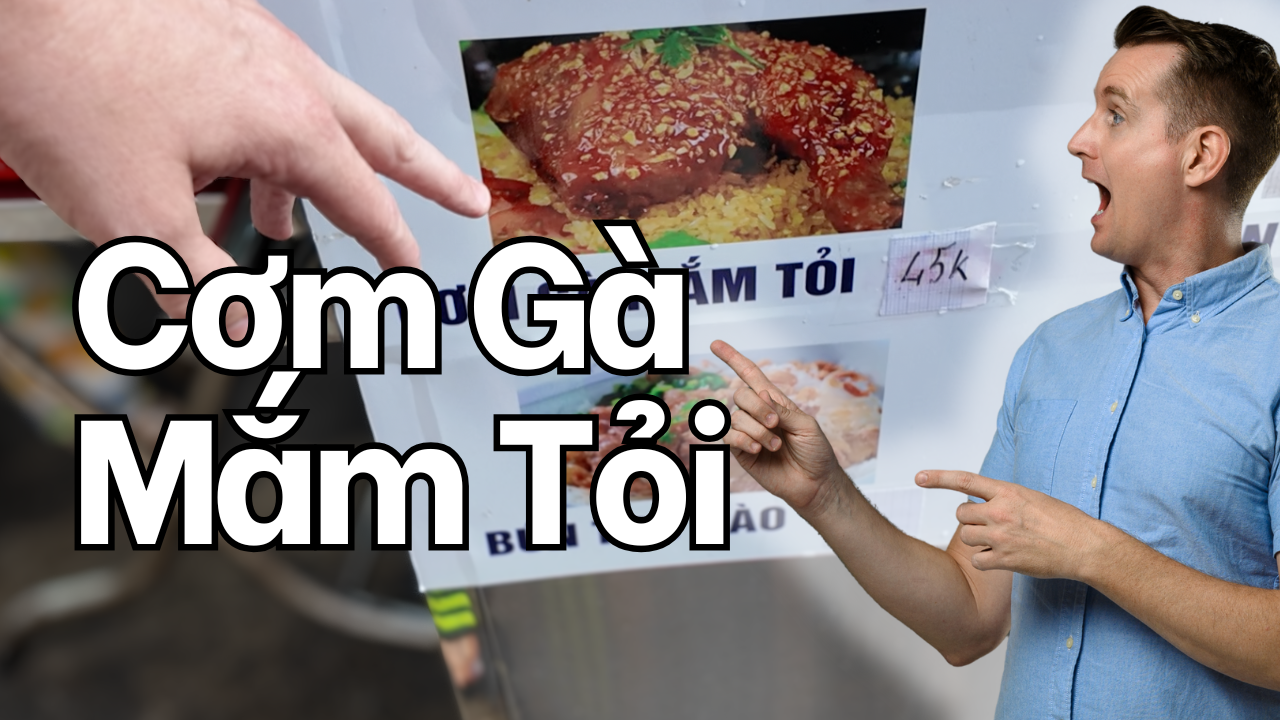
We ducked down a hẻm — one of Saigon’s narrow residential alleys — to a small fried chicken and rice spot I’d stumbled on and hadn’t been able to stop thinking about since. Neither of us knew going in exactly what we were ordering, which, honestly, is half the fun of these walks.
Cơm gà mắm tỏi isn’t a dish that shows up on tourist lists, and that’s exactly why I like it. It’s lunch food — the kind of thing people eat once or twice a month because, as Te put it, there’s a lot of oil involved. But the combination of crisp fried chicken, chicken-fat rice, and a punchy garlic fish sauce is one of those simple Vietnamese formulas that’s hard to improve on.
The Dish: Cơm Gà Mắm Tỏi
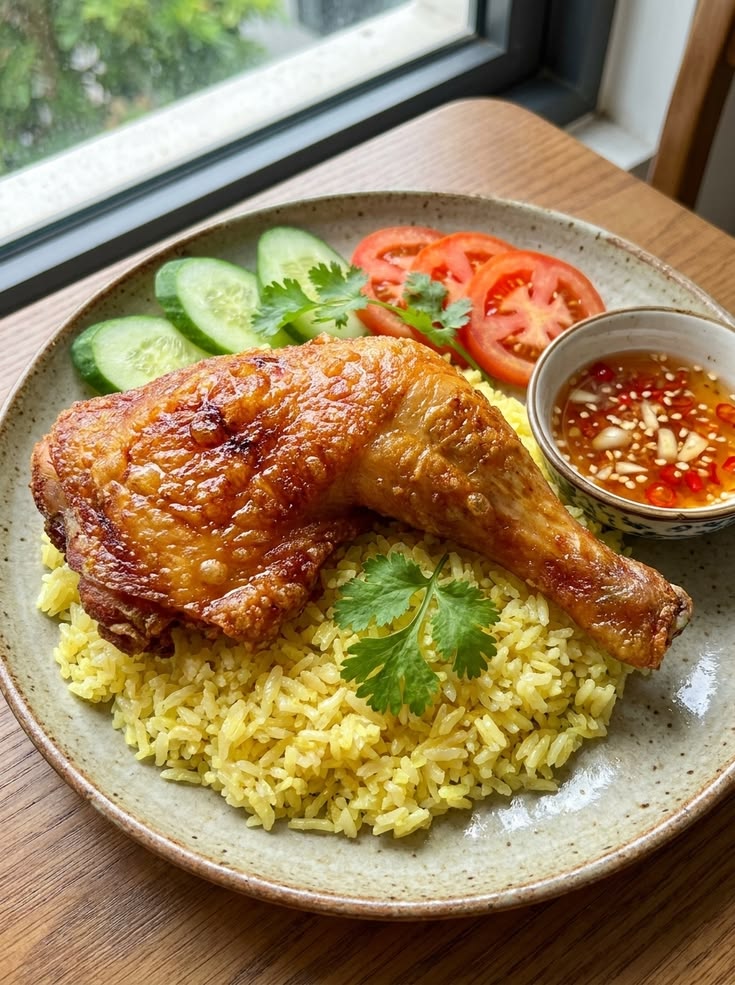
What we landed on was cơm gà mắm tỏi — fried chicken served over rice with a garlic and fish sauce dressing. It’s a dish built around a handful of simple components, but each one is doing real work.
The chicken
The chicken at this stall is deep-fried until the skin turns deeply crisp — the staff described it to me as chicken that’s essentially “showered in oil,” fried hard enough to render the fat and blister the skin. That intense frying is the whole point: it’s what separates cơm gà mắm tỏi from a simpler roast or poached chicken-and-rice dish. The result is a piece of chicken with a shatteringly crisp exterior and juicy meat underneath, meant to be eaten with your hands as much as with a spoon.
The rice
This is the part that had both of us stumped at the table. The rice wasn’t the long, separate grains you’d expect, and it definitely wasn’t broken rice (cơm tấm) — it was shorter, thicker, noticeably yellow, and fluffier than plain steamed rice. This style of rice is a hallmark of cơm gà dishes across Vietnam: it’s typically cooked or fried in rendered chicken fat, sometimes with a touch of turmeric, which is what gives it that golden color and rounder, richer flavor. Unlike the rice used for cơm tấm, this rice is meant to carry the taste of the chicken itself, so the two are inseparable — you’re not really meant to eat one without the other.
Mắm tỏi — the sauce that names the dish
Mắm tỏi translates roughly to “garlic fish sauce,” and it’s the dressing that gets poured directly over the chicken and rice. It’s built on nước mắm (fish sauce) blended with garlic, and usually balanced with sugar, lime, and chili — the same base logic as the dipping sauce (nước chấm) found across Vietnamese cooking, just made bolder and more concentrated to stand up to fried chicken instead of playing a supporting role. It’s this sauce, more than anything else on the plate, that gives the dish its name and its punch.
Regional variations
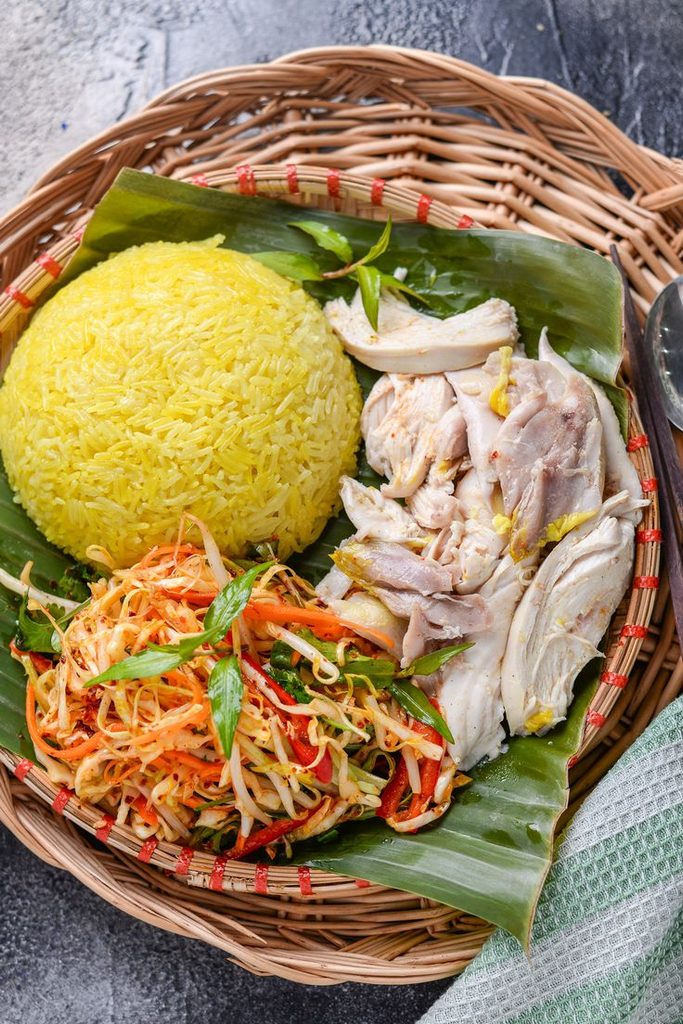
Cơm gà shows up all over Vietnam in different forms — Hội An’s cơm gà is famous for its shredded chicken and rice cooked in chicken broth, while further south and in the Mekong Delta, the fried, mắm tỏi–dressed version like the one we ate is more common. The through-line across all of them is the same idea: rice cooked with chicken fat or broth so it’s never a neutral base, paired with chicken prepared in a way that’s specific to the region.
Sides on the table
Alongside the main plate, we were given fresh cucumber and had our eye on xôi xào — a pan-fried sticky rice, deep-fried until it develops its own crisp edges, offered as an alternative or addition to the regular rice for those who want something even richer. It’s a small detail, but it reflects how many fried-chicken-and-rice stalls in Vietnam build in extra textures and options rather than sticking to one fixed plate.
The price
The whole meal — chicken, rice, sauce, and sides for two — came out to 125,000 VND, roughly $5 USD split between us. Simple, filling, and cheap enough that neither of us thought twice before promising to come back.
Listen more
This is a perfect choice for lunch as Cơm Gà Mắm Tỏi is very easy to find, affordable and can provide you enough energy for the whole afternoon.
Want more recommendations for lunch? Subscribe Discover Vietnam: A Vietnam Podcast for more.