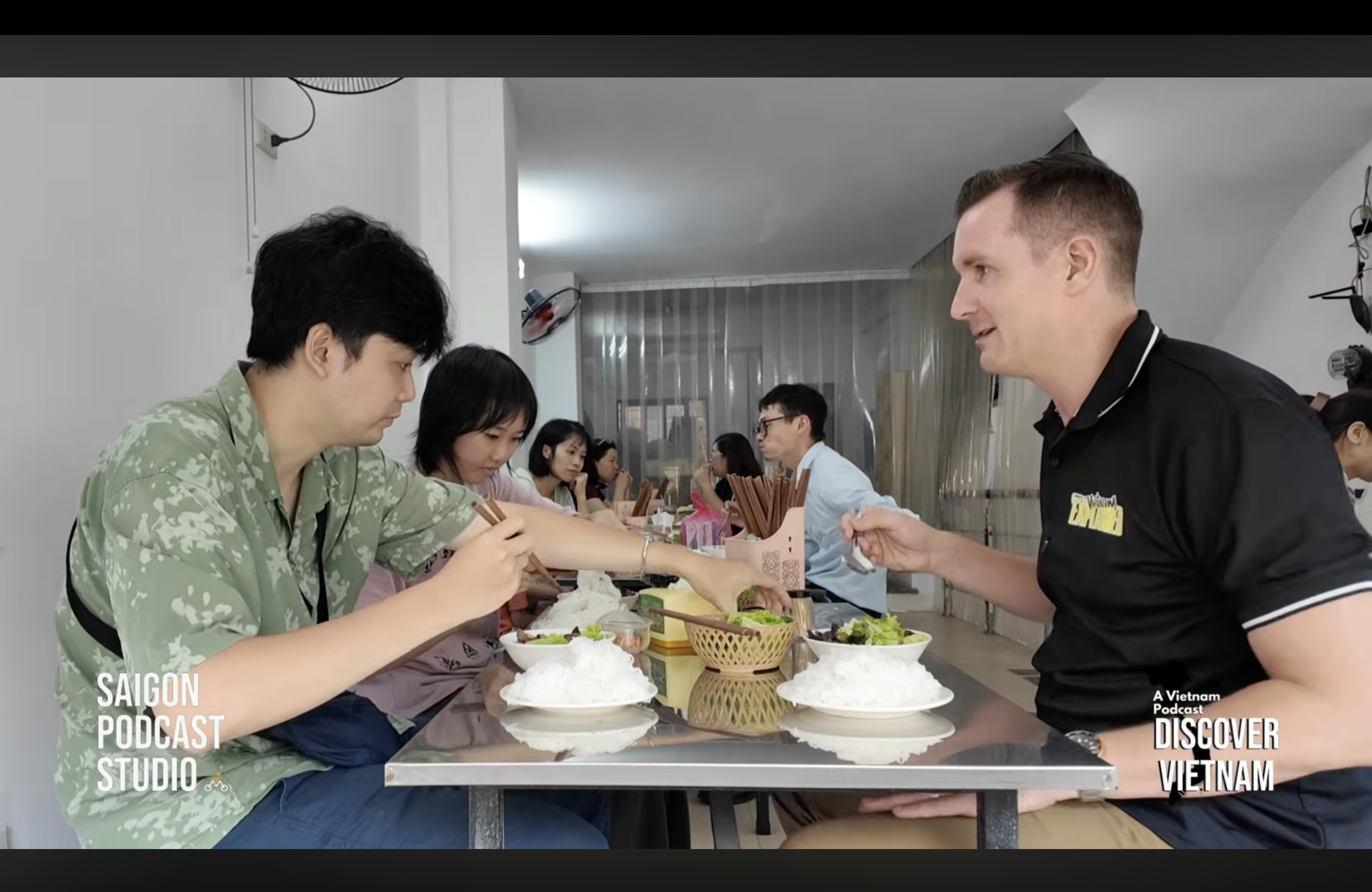
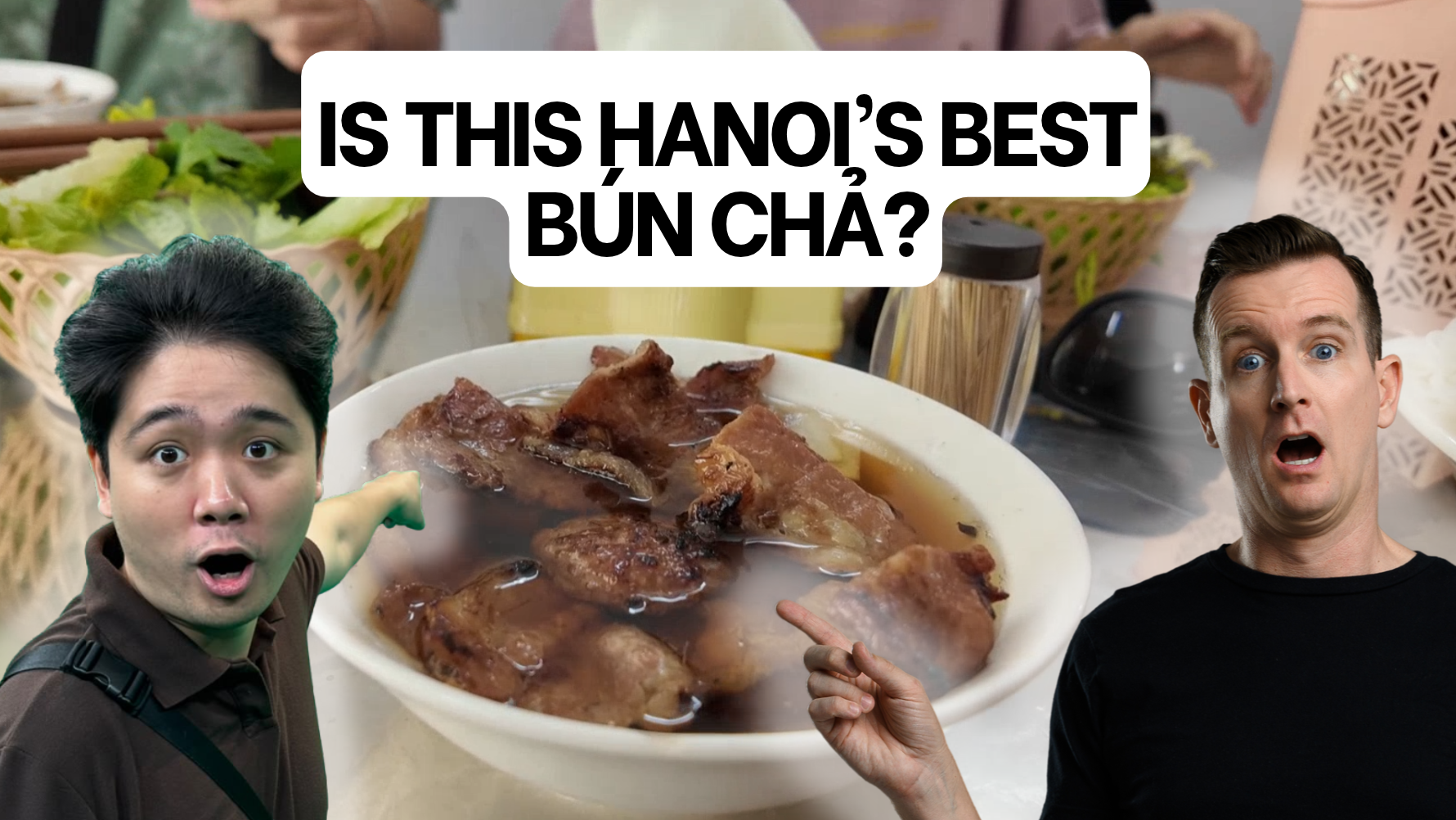
I was in Hanoi filming more episodes of Vietnam Explained for VTV, and the schedule was brutal. We’d shot two episodes that morning, had two more lined up for the afternoon, and I’d somehow agreed to squeeze in a YouTube video podcast between them. It was hot and wet at the same time, which is a special kind of tiredness, so I decided the best use of my lunch break was another lunch walk.
I brought two of the VTV crew along, including Trang, who joined me on the previous Hanoi walk. They told me about a “bún chả” place just two minutes from where we were filming. I’d been once before on my own, because I generally eat lunch by myself like a loser, and the man at the front says hello every time I walk past. When I told the team, they said they eat there too. Honestly, I’ve realized the only way I can get anyone to have lunch with me is if I film it for YouTube.
What I loved about this walk is that I was eating bún chả in Hanoi with people who actually grew up with it. So instead of just telling you what I thought, this post is about what makes a good bowl, according to the locals.
It’s Just “Bún Chả” Here
First, a small language point. In Saigon, we say “bún chả Hà Nội” to make it clear we mean the Hanoi style. I joked in a recent episode that in Hanoi, people probably just call it bún chả. I was right. Long, one of the VTV team who took me, confirmed they just call it bún chả, the same way I see “bánh mì Sài Gòn” signs all over Hanoi.
There’s More Than One Kind of Bún Chả
Here’s something I didn’t know after all these years. Long explained that bún chả isn’t a single dish. There are a few different styles:
- The classic dipping style. Grilled pork patties and pork belly served in a fish sauce broth, with a separate plate of rice vermicelli. This is the one most people know.
- A grilled slab version. Instead of small patties, minced meat is formed into a large rectangular slab and grilled. You tear it up and eat it with the noodles.
- A version served with broth. Long described this as bún chả you eat with broth, a bit like phở, where the meat and noodles sit in a proper soup.
I’m still catching up on the variations, but it shows how much a single name can cover in Vietnam.
What Makes a Good Bún Chả
I asked Long what separates a good bowl from an average one, and the answer was very clear: it’s all about the quality of the meat and the fish sauce.
Fresh Meat Matters Most
Bún chả is grilled meat, and that’s it. It isn’t a stew that cooks for hours with herbs and spices covering up anything wrong. As Long put it, you can taste immediately if the meat isn’t fresh, because there’s nowhere for it to hide.
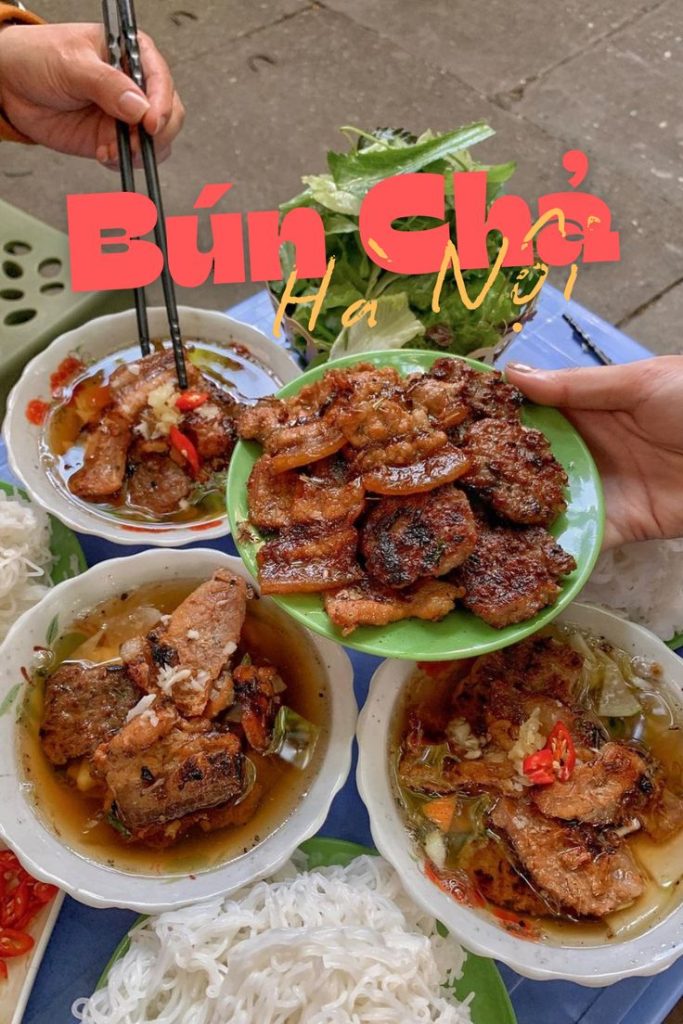
This is also why he preferred this restaurant over the other bún chả place near the studio. The pork belly here comes in proper, nice pieces, with good fat distribution through the meat. At the other place, he said, the meat is cut up very small, so you lose that balance of fat and lean. Seeing the char on the fatty edges when it arrived at our table, I could tell he was right.
The Size of the Patty
The patties, called chả, are the other half of the dish. For years I called them burger patties, because that’s exactly what they look like. At this restaurant, the patties are a decent size, bigger than the tiny, pebble-sized ones Long finds at the other place. He prefers the bigger ones, and so do I. They’re juicy and smoky, and they hold up better in the broth.
The Marinade
The marinade is important, but it’s never too heavy. Long said the pork belly is typically marinated with lemongrass and fish sauce, which he was sure about, and probably some sugar or soy sauce, which he wasn’t certain of. As I joked, lemongrass and fish sauce go into nearly every Vietnamese dish. But the subtle differences in each kitchen’s version are what give each place its own character.
The Dipping Broth
The broth is called nước chấm, and I’ll admit I had to google it recently. I felt a bit ashamed after living here for so long. It’s fish sauce mixed with water, sugar and vinegar or lime. That’s what makes bún chả different from phở: the broth isn’t a soup, it’s a flavoring for the noodles and meat.
Long told me something I hadn’t thought about. When his family made bún chả at home, they used lime. Most restaurants, though, prefer vinegar, because the acidity is more consistent. Not every lime has the same level of sourness, but vinegar gives you the same result every time. When you’re making hundreds of bowls a day, that consistency matters.
How to Eat It
At the table, everything arrives separately: the bowl of broth with the grilled pork, a big plate of rice vermicelli, and a pile of fresh herbs. We had coriander, lettuce and mint, plus lime, garlic and chili to add as we liked.
I learned how to eat Vietnamese food mostly by copying what other people do. This time, I noticed Trang using her hands to move the noodles into her bowl, which I don’t normally do. It turns out it’s much easier. The noodles stick together in a big mass, and chopsticks can feel clumsy. I usually dump a huge pile of noodles in at once, which Trang and Long probably find hilarious. Taking a little at a time is smarter, so the noodles don’t go soggy.
I added chili, and even though the pieces were small, it gave the broth a nice kick. I also noticed the thick chopsticks, which I first thought were special phở chopsticks. Long guessed the same thing, but we never got to the bottom of it.
The Verdict
We ended the meal by giving the place a score. Long gave it a solid 7.5 out of 10. He said it’s a very good place, but he’s eaten better, so he can’t call it perfect. I leaned toward an 8. When Trang was asked, she joined in with the 8, which I decided meant she just wanted to be part of the cool crowd.
It’s an interesting reminder that taste is personal and relative. When I first came to Hanoi to film the show, I tried bún chả for breakfast at a tiny place down a back street, expecting something incredible and authentic. It wasn’t that good, and Long’s explanation about fresh meat probably explains why. Meanwhile, I’m biased toward my usual spot in Saigon, because it’s what I’m used to.
Why Vietnamese Food Is So Good
Over lunch, I asked the team why they think Vietnamese food is so popular around the world. Trang said Western eaters love umami, and that it’s a big part of the whole Asian food experience. She also pointed to the condiments, like chili sauce, garlic and fish sauce, that let you adjust each bite.
I think she’s right. In one bowl of bún chả, you’ve got smoky grilled pork, lemongrass, garlic, chili, mint, coriander, sweet, sour and salty notes all working at once. Compared with that, a lot of British food can taste bland, which I say with love for my home country.
Listen to the Full Episode
If you want to hear Long break down what makes a good bún chả, and watch me struggle with the noodles, listen to the full lunch walk on the Discover Vietnam podcast.. I’ll be back in Hanoi again soon.