
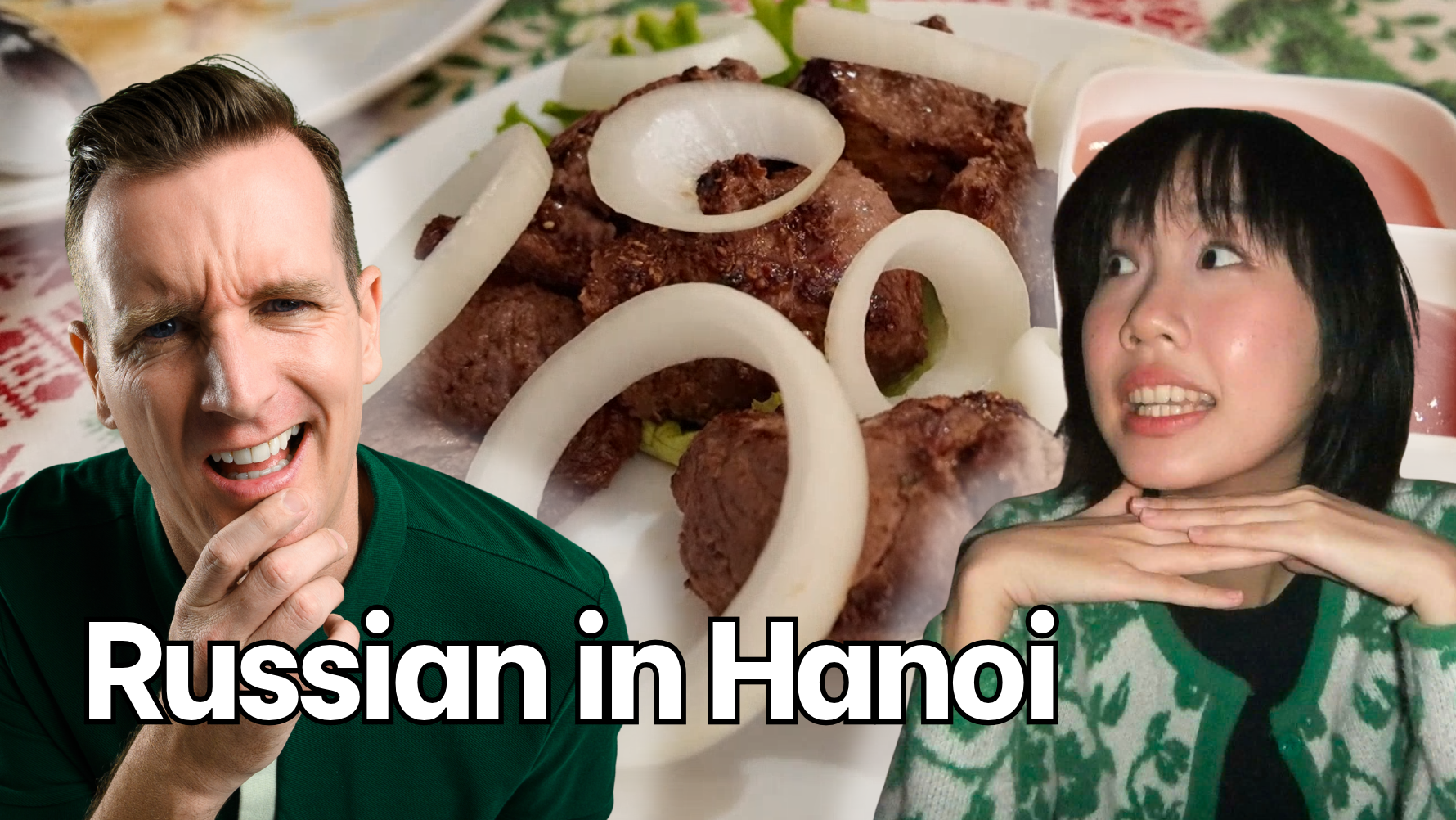
This lunch walk has a few firsts. It’s my first lunch walk in Hanoi, my first lunch walk with someone from the VTV team, and, I’ll admit, my first ever Russian meal in Vietnam. I was up in Hanoi filming more episodes of Vietnam Explained, and since the team there tends to order in at their desks, I made Chang Liu, an editor and group producer on the show, take me out of the building for lunch. She picked a Russian restaurant near the studio.
I hadn’t seen that coming, but it turned out Chang was born in Russia. Her parents moved there to study at university and stayed on, selling goods at one of the big markets. She moved back to Vietnam when she was four and went to a Russian school in Hanoi, so she grew up around Russian teachers and Russian food. That connection isn’t unusual. Vietnam and the Soviet Union were close for decades, and many Vietnamese families have a story about studying or working in Russia or Eastern Europe. After ten years here, I’d never even heard of a Russian restaurant in Vietnam. So I let Chang order, and here’s what we ate.
A Russian Menu, Section by Section
Chang walked me through the menu like a tour guide. The structure is quite different from a Vietnamese menu, with lots of cold starters, salads, soups, dumplings and meat dishes.
The Starters
First up was black bread, a dense rye bread, served with butter. You’re meant to eat the butter on the bread rather than on its own. Then came caviar, which Chang says Russians love, and an impressive plate of pickles. I love pickles, and there were so many different kinds. There was also raw fish on the menu, which I skipped.
The Salads
The most famous salad is olivier, which is the one most of us would call Russian salad. It’s made from boiled potatoes, carrots and eggs, all mixed with mayonnaise. It’s creamy and hearty, nothing like what I’d call a salad in Scotland.
The Soups
Two soups stood out. Borscht, the beetroot soup, is probably Russia’s best-known dish outside the country, and I’ve had it before. It’s usually served with a spoonful of smetana, which Chang describes as what happens when Greek yogurt and cream cheese have a baby. In reality, it’s a sour cream with a thick, tangy richness.
The other soup was solyanka, a thicker, sourer soup with a salty, tangy kick. Chang doesn’t eat it often, but she likes it. Since I’d had borscht already, we decided to try something different.
What We Actually Ordered
With a menu this big, Chang suggested three dishes to share, plus a drink. We picked the cabbage rolls, the dumplings and the grilled meat.
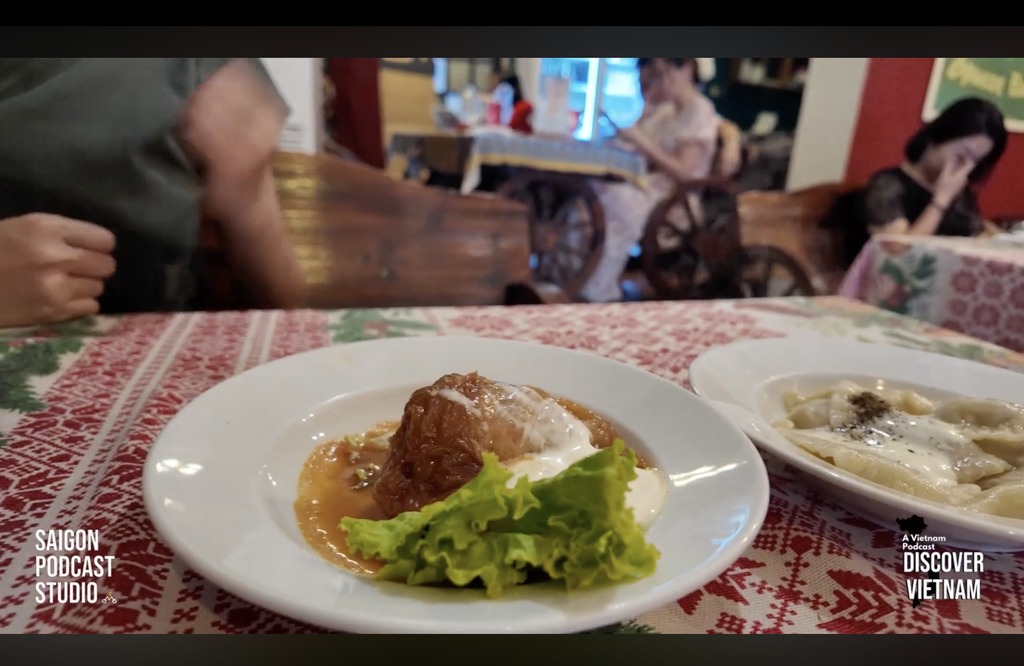
Cabbage Rolls (Golubtsy)
These are called golubtsy in Russian, and they’re one of those dishes you instantly recognize as comfort food. Cabbage leaves are wrapped around a filling of minced meat and rice, then simmered until the cabbage turns soft and silky. They’re often cooked in a tomato-based sauce or broth, which seeps into the leaves.
When they arrived, I honestly thought they were chicken. The cabbage was so tender that it looked like a piece of meat. Inside, the filling was juicy and savory, and the whole thing had a gentle sweetness from the cabbage and tomato. It’s a very homey dish, the kind of food that someone’s grandmother makes on a cold day.
Dumplings with Potato and Mushroom
Dumplings are a huge part of Russian home cooking. Chang says she eats them all the time because her mum buys them in packs and boils them for a quick breakfast or dinner. There are lots of types. Pelmeni are small, meat-filled dumplings, while vareniki are usually filled with potato, mushrooms, cottage cheese or even cherries.
Ours were stuffed with mashed potato and mushrooms, which also made them our vegetable dish of the meal. Chang picked them because she said we needed something green on the table, which made me laugh since they’re basically potato dumplings. Still, the soft, earthy filling and the tender dough were really satisfying. I could see why they’re such a staple.
The Grilled Meat
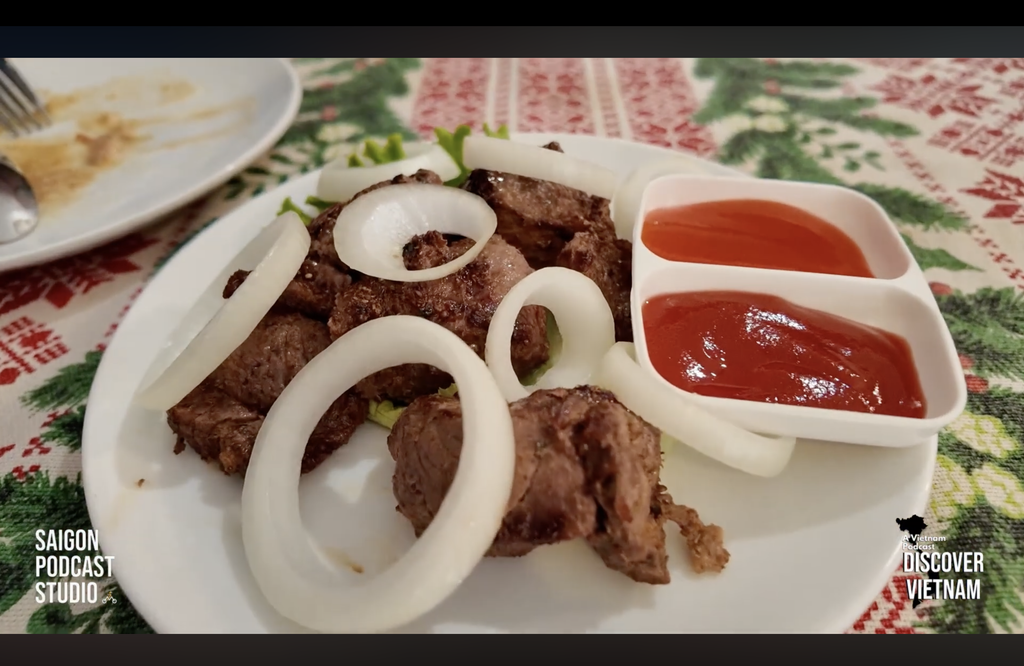
The third dish was grilled meat, and this is where things got a bit mysterious. Chang says Russian grilled meat feels different from other styles, and that the best versions come from Armenian cooks at fairs. This is the tradition often known as shashlik, where meat is cooked over fire, with roots in the Caucasus and Central Asia.
I was curious about the marinade, but neither of us knew what was in it. Chang admitted she’s not a cook. What I can say is that it was smoky, juicy and well seasoned, and it came without any sauce at all. Chang told me she dips hers in ketchup, and I’d been expecting ketchup to be the default too, so we were on the same page.
The Drink: Kompot
To drink, we ordered kompot, a traditional Russian fruit drink. It’s made by cooking down fruit, usually berries or cherries, with sugar, then adding water. Chang wished it had more cherry flavor, but I liked it. To me it tasted like what Americans call cordial. In Scotland, we’d call it diluting juice. It’s sweet and fruity without being heavy, and it works nicely with rich food.
Why Russian Food Is Here at All
The more I thought about it, the more it made sense. Vietnam and Russia share a long history, and there’s a community of Russians in Hanoi, partly because of the embassy and the school attached to it. The restaurant’s owner is Russian and her husband is Vietnamese. Their son even went to the same high school as Chang, although they don’t know that yet. Her mum loves the place and comes here with university friends who also lived in Russia.
That’s what I enjoy most about eating like this. A plate of cabbage rolls in Hanoi isn’t just lunch. It’s a small story about families, study abroad, migration and how food travels with people.
A Bit of Food Culture
Chang also told me about Maslenitsa, a festival that celebrates the end of winter and the beginning of spring. The signature food is crepes, because their round, golden shape looks like the sun. Families make big stacks of them, usually with sweet or savory fillings. The menu also had savory crepes filled with meat, and Chang said she loves crepes more than pancakes or potatoes.
Russian food is hearty, simple and built around ingredients that keep you warm: cabbage, potatoes, beetroot, rye, sour cream and slow-cooked meat. It’s a world away from the fresh herbs and light broths of Vietnamese cooking, which is exactly why it felt so interesting to eat in Hanoi.
There was plenty more on the menu I didn’t get to try, including the mashed potato section, the savory crepes, the solyanka and the cakes. And if we hadn’t had more filming that afternoon, I would’ve had a Russian beer too.