
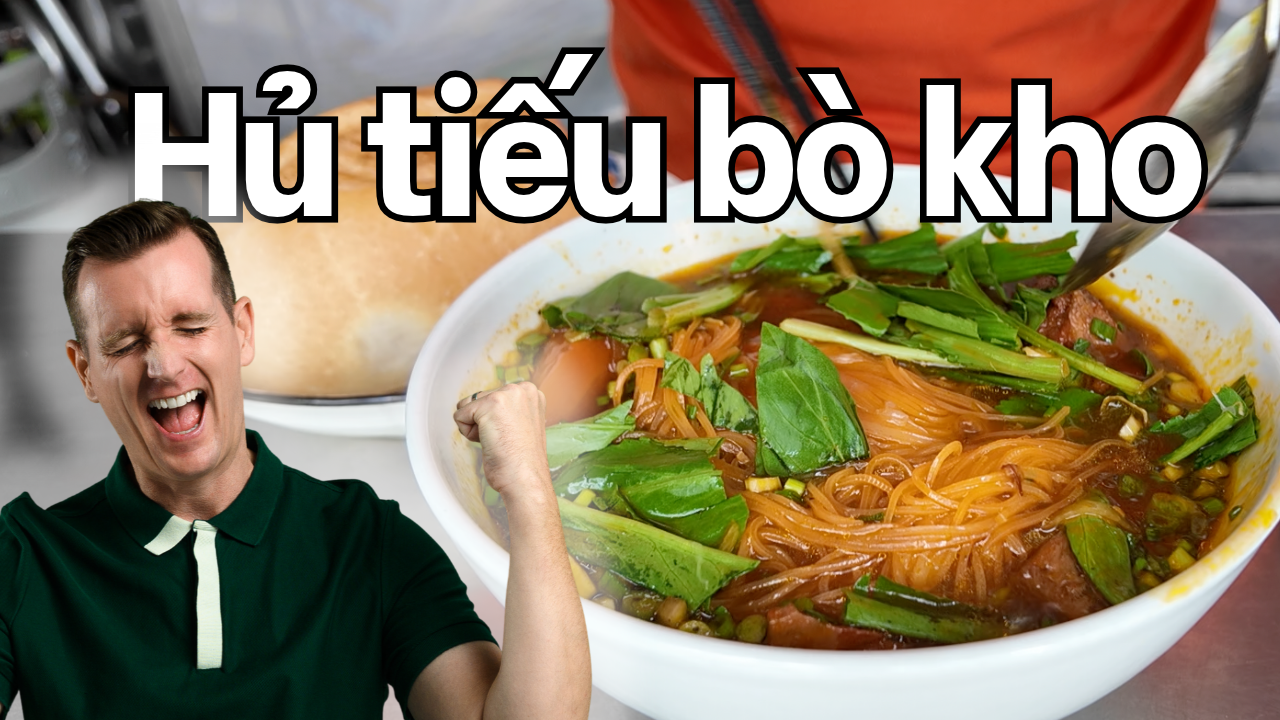
I had a plan for this lunch walk, and it fell apart pretty quickly. I was heading to my regular halal spot near the Al-Rahim Mosque for cơm tấm. When I got there, the stall was closed, which happens a lot with small places in Saigon. So I switched to something else they make really well: hủ tiếu bò kho, a beef stew served with noodles and a piece of bread on the side. The whole thing cost me about $2.50, iced tea included, and it’s now one of my favorite bowls from this whole series.
What Is Hủ Tiếu Bò Kho?
The name tells you almost everything. Bò is beef, kho means braised or stewed, and hủ tiếu is a type of noodle. Put together, you get beef stew with noodles.
The thing to understand is that this is not a clear soup like phở. It’s thicker, richer and closer to a stew, with big pieces of slow-cooked beef sitting in a deeply flavored, gravy-like broth. Compared with the lighter bowls I’ve covered in other episodes, this feels heavier and more comforting.
It’s also a breakfast food for a lot of people in Vietnam. Hot, hearty bowls first thing in the morning are completely normal here.
Where It Comes From
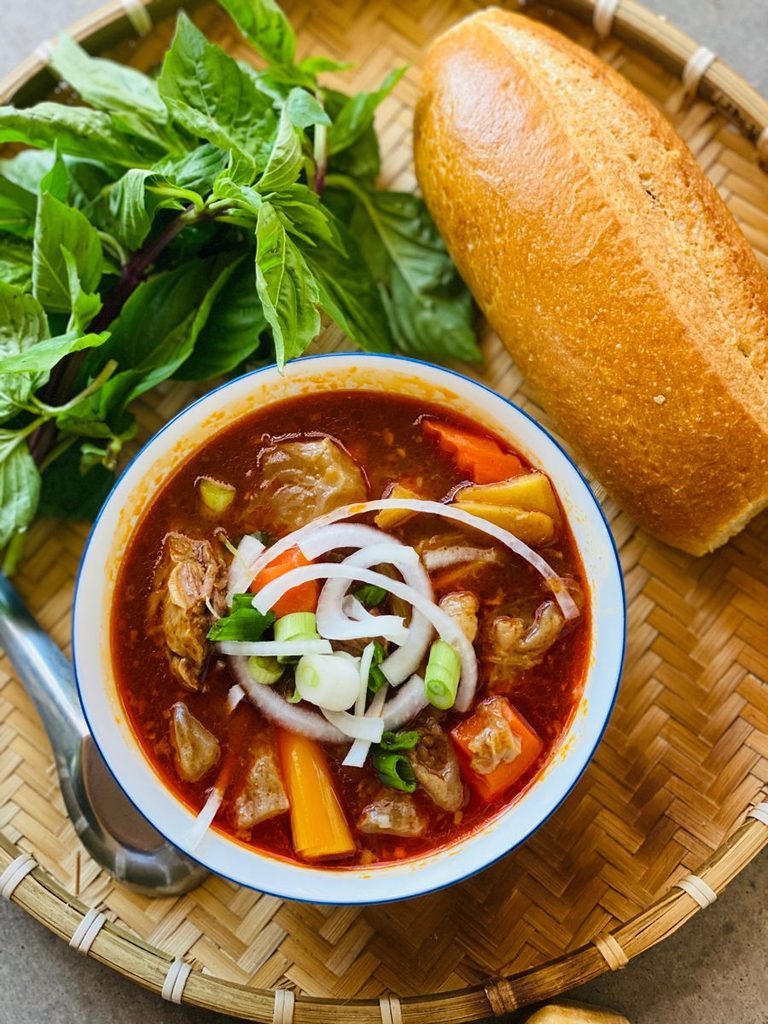
Bò kho is a southern Vietnamese dish, and it’s often said to have been influenced by French-style stews from the colonial era. You can taste the logic of it: meat braised slowly until tender, with vegetables cooked right into the sauce. But Vietnamese cooks gave it its own personality with lemongrass and star anise, so it ended up quite different from anything in a French kitchen.
Hủ tiếu has its own story. It’s strongly associated with southern Vietnam and is generally linked to the Chinese communities who settled in this part of the country, particularly Teochew and Cantonese families. That ties in nicely with what I found on the duck bánh mì walk, where I kept running into traces of Chinese influence all over this neighborhood.
What Goes Into It
The Beef
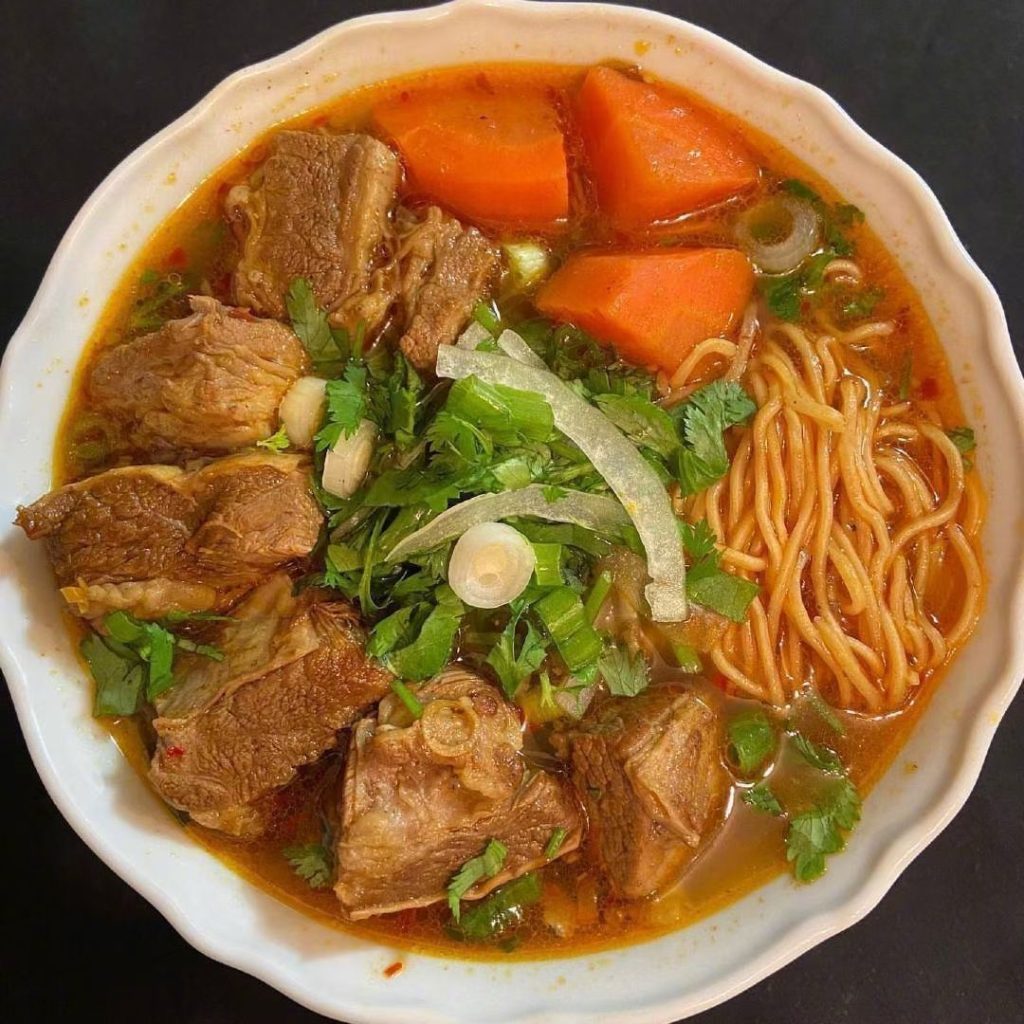
The star of the bowl is slow-braised beef, usually cuts like shank or brisket, and sometimes tendon as well. These tougher cuts need hours of cooking, and that slow braise is what turns them soft and rich. The pieces I got fell apart easily.
The Spices and Aromatics
This is where bò kho really separates itself from other beef dishes. The braise usually includes lemongrass, star anise, cinnamon, cloves, garlic and shallots. Each one adds something different: lemongrass brings a fresh, citrusy note, star anise and cinnamon add warmth and a hint of sweetness, and the garlic and shallots give the whole thing a savory base. The result smells incredible before you’ve even picked up your chopsticks.
The Color and Body
You’ll notice the stew has a deep orange-red color. That usually comes from annatto oil (dầu điều), which is made by steeping annatto seeds in oil. It adds little flavor but gives the dish its signature color. Tomato is often added too, along with a little sugar, to round out the richness and give the sauce a bit of sweetness.
The Carrots
I have to mention the carrots, because they’re one of my favorite parts of the dish. They’re cut into big chunks and cooked in the stew until they’re completely soft, soaking up all that flavor. They taste like the stew itself.
The Noodles
Hủ tiếu noodles are chewy and slightly translucent, and they’re usually made from rice, sometimes with tapioca starch mixed in. They have more bounce than the flat rice noodles you get in phở, and they hold up well in a thick stew without turning to mush. In the bowl I had, the noodles gave a nice chewy contrast to the soft beef and carrots.
What It Tastes Like
If I had to describe the flavor, I’d say it’s rich, savory and gently sweet, with a warm spiciness that comes from the cinnamon and star anise rather than from chili. It’s not a spicy dish by default. The beef is tender and fatty, the carrots are almost creamy, the noodles add chew, and the sauce ties everything together.
Compared with other Vietnamese noodle soups, it sits somewhere in the middle. It’s less delicate than phở and less aggressive than bún bò Huế with its shrimp paste and chili. It’s just warm, deep and satisfying, the kind of food that makes you slow down.
How I Eat It
There’s a little ritual to this bowl, and it took me a while to figure it out. Alongside the stew, you’ll get a plate of fresh herbs. I tear up some sawtooth herb (ngò gai) with my hands and drop it straight into the bowl, then do the same with the Vietnamese mint. I used to look at that plate and wonder what on earth I was supposed to do with it. Now I wouldn’t eat the dish without it.
Then I squeeze in some lime to brighten everything up. If you like heat, you can add chili, but the ones here tend to be quite strong, and honestly it was too hot outside for me to bother.
The bread is the other essential part. You get a piece of bánh mì on the side, and you tear it up and dip it into the stew to soak up all that sauce. By the end I basically wanted to drink what was left of the sauce. I used chopsticks for the noodles and a spoon for the broth, and switched between the two
Where and When to Eat It
A full bowl costs around $2.50, which is incredible for the amount of food you get. It’s a great option for a rainy day, but I’ve also seen people eat hot stews like this in the middle of a heatwave. I still don’t understand it, but I’ve learned to accept it.
One word of warning: small stalls like this can close without notice. I’ve turned up several times to find the shutters down, so it’s worth having a backup plan nearby. In my case, the backup turned out to be even better than the original plan.