
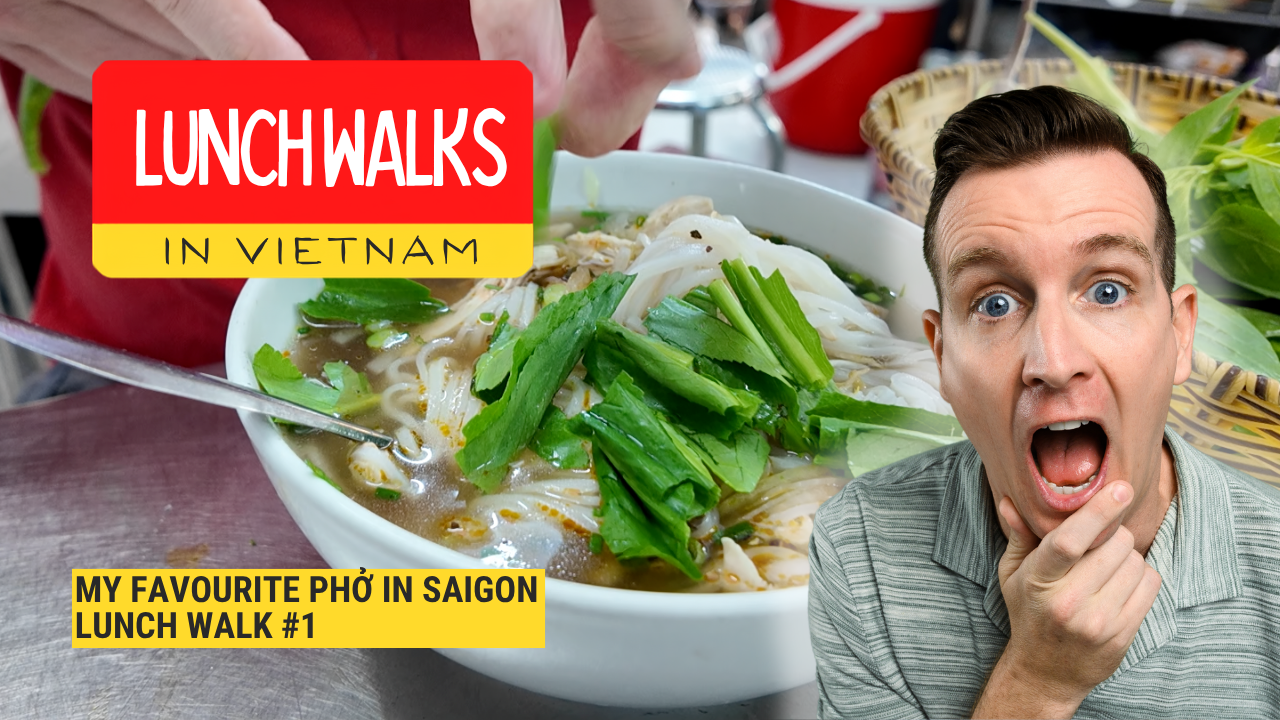
For the first episode of Lunch Walk, a new offshoot of my Discover Vietnam podcast, I ditched the studio microphone for a handheld camera and took you along on my actual lunch break. I’m based out of Saigon Podcast Studio on Pasteur Street, and today I walked a few blocks into the heart of District 1 to a small phở stall I now visit at least once a week.
The spot sits on Nguyễn Công Trứ Street, right beside one of Saigon’s few mosques — which is what makes it special. This is a halal phở restaurant, and it’s become a lunchtime anchor for the city’s Muslim community, including plenty of visitors and residents from Indonesia and Malaysia who come here for a taste of home-style comfort food that fits their dietary requirements.
Tradition of Pho
Phở needs no introduction as Vietnam’s most famous export, but halal phở is a smaller, quieter story within that bigger one — and it’s a good window into how adaptable Vietnamese cuisine really is.
A quick word on phở itself Phở originated in northern Vietnam in the early 20th century, most likely around Nam Định province, with influences from both Chinese noodle soups and French beef consommé (Vietnam was under French colonial rule at the time, and pot-au-feu is often cited as an ancestor of the dish).
It made its way south to Saigon after 1954, when hundreds of thousands of northerners migrated following the country’s division, and it was in the south that phở picked up the sweeter broth, the bigger pile of herbs, and the bean sprouts and lime it’s known for today. Northern phở, by contrast, tends to be simpler and more restrained — fewer herbs, a cleaner broth, less sugar. What I’m eating on this walk is very much the southern style.
How the broth is actually made?
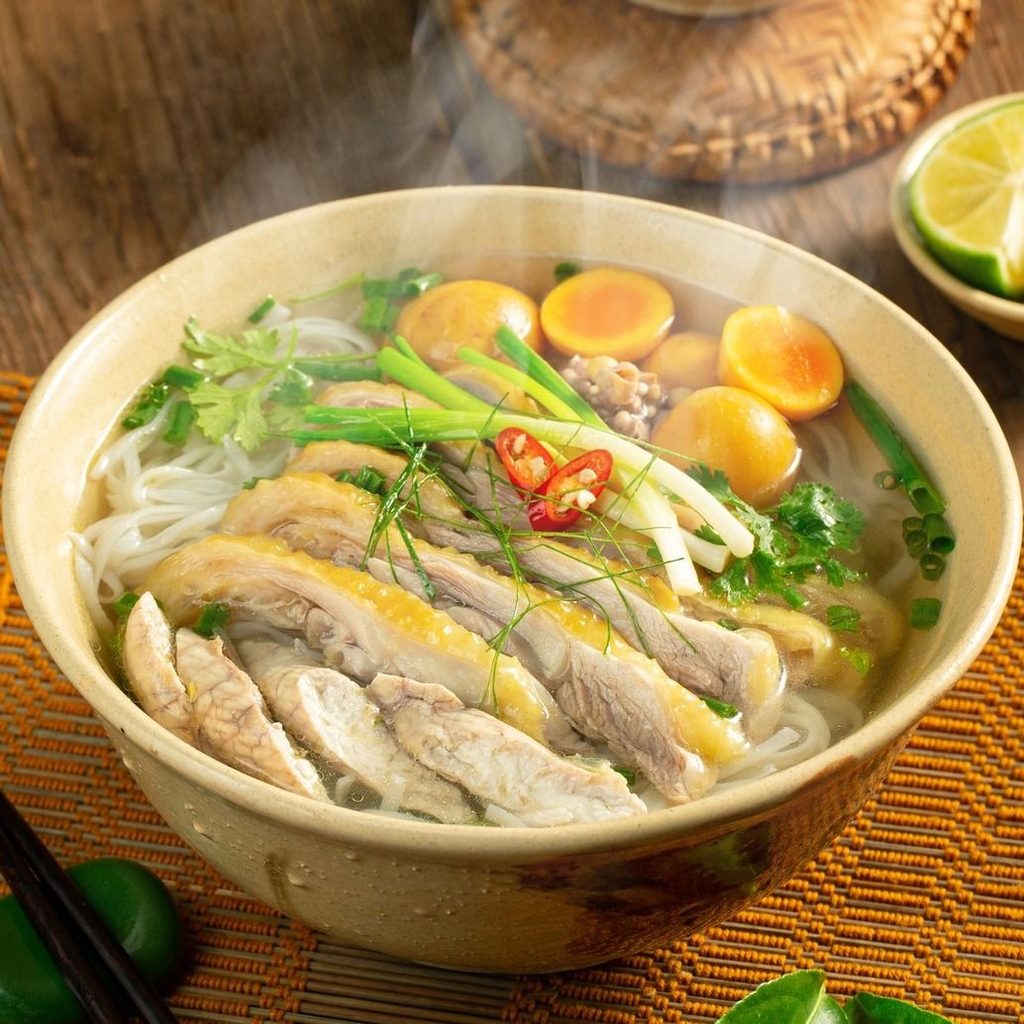
The broth is where a phở kitchen lives or dies, and it’s a slow process no matter which protein you’re using. For phở gà (chicken), whole chickens and chicken bones are simmered for hours with charred ginger and onion, which get blistered over an open flame first to pull out a smokier, sweeter flavor before they go in the pot. Spices are added in a muslin bag or tea strainer so they infuse without clouding the broth — usually star anise, cinnamon bark, cloves, and coriander seed, sometimes with a little cardamom or fennel. Fish sauce and a bit of rock sugar round out the seasoning, and the broth is skimmed constantly to keep it clear rather than cloudy. A beef version (phở bò) follows the same idea but uses beef bones — often oxtail or knuckle — simmered even longer, sometimes 8-12 hours, for a deeper, more mineral flavor.
The Dish: Halal Pho
What makes it halal
Traditional phở is naturally free of pork, so in one sense it already has a head start toward being halal-friendly. But a genuinely halal kitchen goes further: the meat has to come from animals slaughtered according to Islamic dietary law (dhabihah), the kitchen has to avoid cross-contamination with non-halal ingredients or equipment, and cooks have to watch for hidden animal-derived additives — some fish sauces, broths, or sauces can be a grey area depending on how they’re made.
That’s exactly why a dedicated halal phở spot matters to me — it lets Muslim diners eat with total confidence, without having to interrogate every bowl. Restaurants like this one are often informally certified through their proximity to and relationship with the local mosque, rather than a big-brand halal logo, which is part of what makes them feel like genuine community spots rather than commercial operations.
The bowl itself
My order here is always the same: phở gà, chicken phở, with an extra side of chicken breast meat. I’ve noticed something any regular phở eater in Vietnam will recognize: the chicken can be hit or miss. A lot of Vietnamese chicken comes from “walking chicken” (gà thả vườn) or free-range birds, which are flavorful but often tough, with lots of small bones and cartilage to pick through. What sold me on this place was the opposite — clean, tender white breast meat, easy to eat and, honestly, good for getting my protein in. You know what it’s all about these days.
A bowl of phở gà typically comes with flat rice noodles (bánh phở), made from just rice flour and water, which is also what makes phở naturally gluten-free. The noodles are par-cooked, then blanched again to order in hot water right before the broth goes in, which is why a good bowl arrives with noodles that are soft but never mushy.
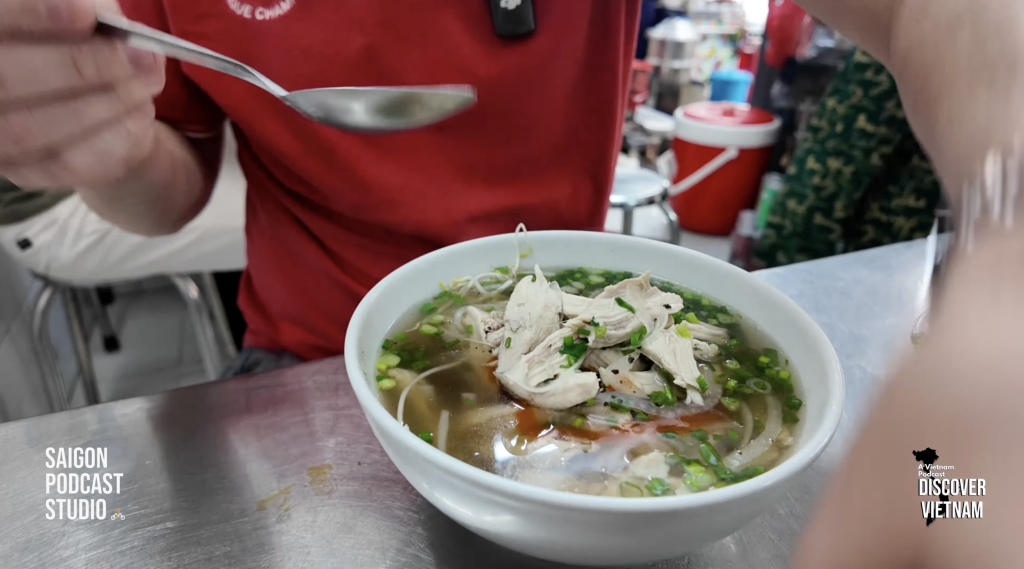
Building the bowl at the table Part of the ritual of eating phở in Vietnam is customizing it yourself, and here’s how I build mine:
- A little hoisin sauce, stirred in for sweetness and depth
- A touch of chili, added cautiously — I usually overdo it and regret it, so I’ve learned to go easy
- A handful of herbs, including ngò gai (sawtooth herb, named for its jagged, saw-edged leaves), which brings a sharp, citrusy freshness that balances the richness of the broth
- Fresh lime and other table greens, standard companions to almost any phở bowl in the south
Other common herbs and add-ins you’ll see on southern phở tables, even if I don’t always use them all, include Thai basil, culantro, bean sprouts, and sliced red chili in vinegar. The idea is that the kitchen sends out a “neutral” bowl and every diner finishes it slightly differently — no two bowls at the table ever end up quite the same.
Why it’s worth seeking out
Beyond the food, this halal phở stall is a small case study in how Vietnamese cuisine bends without breaking to serve different communities. Saigon doesn’t have many mosques, so a halal eatery tends to become a genuine neighborhood hub — I can hear Indonesian and Malaysian accents around me almost every visit. It’s also a very local, family-run operation, the kind of place that closes without warning when the owners need a break and reopens just as suddenly. That unpredictability is part of the charm for me — and part of why finding it open feels like a small win.
If you want to find it, it’s easy once you know the cross streets: right around Nam Kỳ Khởi Nghĩa and Nguyễn Công Trứ, just parallel to Hàm Nghi and a short walk from Bến Thành Market — squarely in Saigon’s District 1 food core.