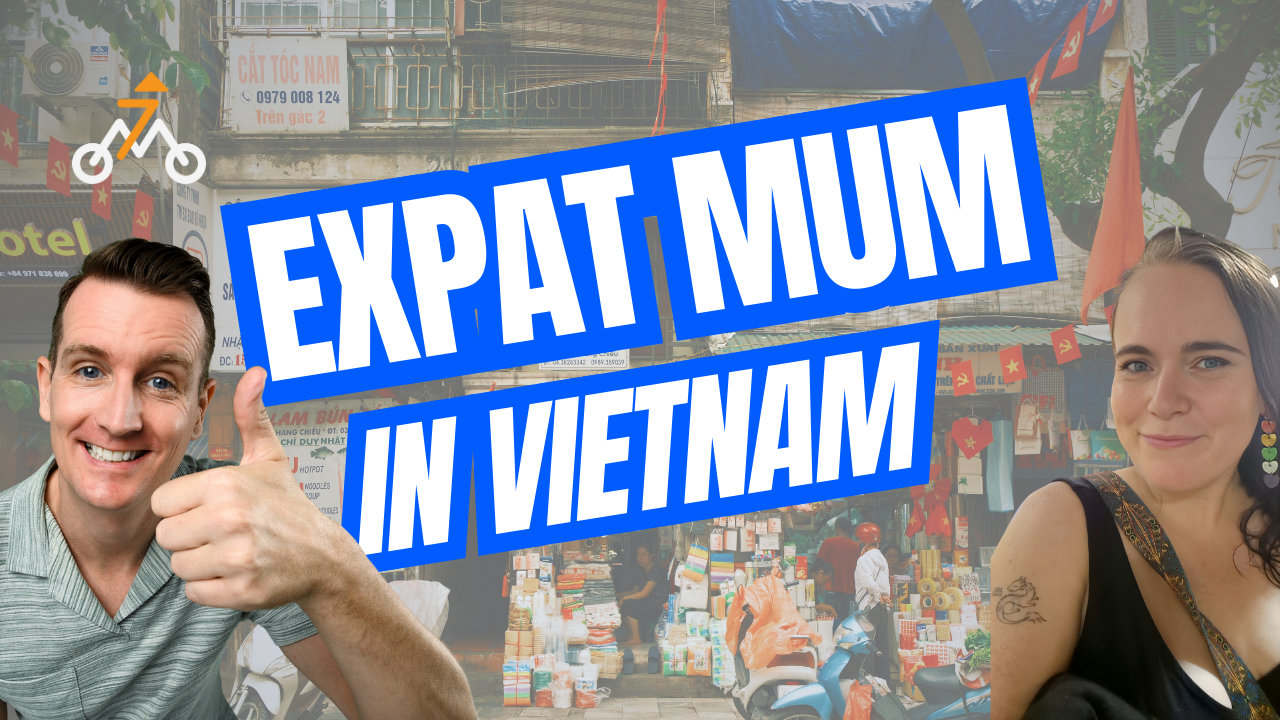


Niall Mackay’s here. I am the founder of Seven Million Bikes Podcasts and the host of this show.
I’ve lived in Vietnam for almost ten years now, but I’ve never experienced being a parent here. So when I got to sit down with my friend Claire Simpson, who has also lived here a decade and is now a new mum, I realised just how much there was to understand about raising a child as an expat in Vietnam.
Talking with Claire opened my eyes to the practical side of pregnancy, birth, childcare and daily life as a mother here. It also reminded me how many expats have the same worries, questions and misunderstandings about the country. I wanted to turn her story into a blog post because I know it will help anyone who’s thinking about starting a family here, or even just visiting Vietnam with young kids.
I Never Planned to Stay This Long, Never Mind Have Kids Here
Whenever I tell people I’ve been in Vietnam for nearly ten years, they always ask if I ever planned it. I didn’t. I came for six weeks and just never left. Claire told me she was the same. She arrived in Hanoi with no idea she’d still be there a decade later, and even less idea she’d become a mum in Vietnam.
When she found out she was pregnant, it wasn’t planned and it came with mixed feelings. She was excited, of course, but also worried about what pregnancy and birth would look like as a foreigner. Healthcare in Vietnam works differently. You pay for everything, and if you don’t have maternity insurance like Claire didn’t, the costs can add up fast.
The first challenge she faced was choosing a hospital. In Hanoi, there are a few major ones that expats tend to use, like the French Hospital or Vinmec. They’re good, but they’re not cheap. Claire and her husband needed something safe but also affordable, especially because they knew they’d be paying out of pocket. They ended up choosing a semi-private hospital near their home, which meant less travelling for appointments and better peace of mind. Even that small decision shows the type of thinking expat parents need to do here — things you don’t have to consider in the same way in your home country.
Pregnancy in Vietnam Is a Whole Different System
One thing that surprised me was the idea of “maternity packages.” Hospitals offer full packages that cover everything from 12 weeks through to delivery. Claire’s package cost around 27 million VND, which is just over a thousand dollars. For what you get, it’s actually pretty good value. It included scans, tests and regular check-ups right until the birth.
Of course, things don’t always go to plan. Claire ended up needing a C-section, staying longer in hospital, and her son being taken to NICU. As anyone who’s had a baby knows, once complications happen, the costs rise quickly. In the end, their bill was closer to 45 million VND. Still, when you compare that to many Western countries, it’s not a shocking number.
But it wasn’t only the cost that stood out. Claire explained how different the medical process was. She mentioned one test that required fasting for hours and drinking a huge glucose drink. She researched it herself and found out it wasn’t required in every country, so she refused. And she wasn’t scared to say no, even though she thinks the hospital probably wrote “stubborn” on her file.
That’s something I’ve learned about healthcare in Vietnam — you need to advocate for yourself. The system is good, but it’s not the same as back home. And for expats who don’t speak much Vietnamese, like Claire and me, translation becomes another challenge. Luckily, the hospital she chose had translators, but not all do.
Motherhood Without Family Around Hits Harder Than You Expect
One of the hardest parts about being an expat is not having family close by. I miss mine, and I’m not even raising a kid. So when Claire talked about this, I understood how tough it must’ve been.
During her pregnancy, something unexpected happened — many of her friends stopped inviting her out. They assumed she wouldn’t want to join because she wasn’t drinking. But she wanted social time, not alcohol. A few close friends stayed in her life, but she said it felt like she was losing part of her identity.
After her baby was born, she went through postpartum depression. Talking about this openly takes courage, and I appreciated how honest she was. She didn’t have many mum friends yet, and she didn’t know what to expect. She also didn’t want to be a stay-at-home mum, while many women she met did. Her journey looked different, and that can be isolating.
But something beautiful happened too — family started visiting more often. Her mum now comes two or three times a year. Her mother-in-law comes often as well. For her son, it must feel like his grandparents live inside the phone, and then suddenly they appear in real life several times a year.
That’s the strange joy of expat family life. You don’t see people often, but when you do, you see them intensely. It becomes special in a new way.
If you’re interested in women’s inspiring story: Why Vietnamese Women Continue To Inspire Me As Entrepreneurs
Daily Life With a Baby in Vietnam Has Its Own Challenges
If you’re reading this from outside Vietnam, you might be wondering about formula, diapers, food or whether anything “Western” is available. This is one of the most common questions we see on travel groups, “Can I buy baby formula in Vietnam?”
And the locals often respond with laughing emojis.
Yes, you can buy everything here. Diapers, formula, snacks, toys, even imported brands. And you can order anything from Lazada if you really want a specific version. Claire said nothing has ever been hard to find.
But some practical things are tricky:
High chairs in restaurants
Many places don’t have them, or the ones they do have are broken. Parents often just make do.
Baby changing tables
Almost no restaurants have them. You improvise. You find a corner. It’s just normal life here.
Walking with a stroller
Sidewalks in Vietnam are chaos — motorbikes, stools, shops, everything. Claire shared a scary story of a woman almost driving straight into the stroller because she was on her phone.
And this is true in Saigon too. Even when the sidewalks look perfect, people still park on them. It makes walking with a stroller almost impossible in some areas.
Schooling
This one surprised even me. There is no free education in Vietnam. Every school costs something, even local government schools, and there are big differences depending on class size and quality. For expat kids, international schools are often the obvious choice, but they can be expensive.
Luckily, Claire found a kindergarten she loves. It has English and French, and she knows the teachers personally. Her son will start after Tet when he’s eighteen months old.
The lovely side of it all
Vietnamese people adore children. Everywhere you go, people will smile, talk to your child, and sometimes even pick them up. If you’re new here, it can feel surprising, but it’s done with warmth.
Claire said her son has pale skin, blonde hair and blue eyes, which older Vietnamese women love. They always comment on how white he is or how blue his eyes are. She laughs about it now.
Hiring a Nanny: A Normal Part of Expat Life, But Not Always Easy
Many expat families hire nannies because childcare is more affordable here than in Western countries. But hiring a nanny is not always simple.
Claire went through a difficult experience with her first nanny. She was good at cooking and spoke English well, but she refused to move from hourly pay to a monthly salary even though her hours were full-time. This eventually led to conflict, and when Claire tried to resolve it, the nanny quit, then demanded money she wasn’t owed.
It escalated into shouting, threats, and stress no new mum should have to deal with. In the end, Claire paid her just to end the drama and move on. She was worried enough to even change her door code.
Her second nanny, thankfully, ended things politely, she said Claire’s son simply had too much energy for her. And at least that was honest.
The lesson Claire shared was important:
Know your rights. Have a contract. Talk to other parents. Don’t assume everyone will treat the situation the same way you would.
This isn’t “a Vietnam thing.” This can happen anywhere in the world. But as expats, we often don’t know how systems work, so these situations feel bigger and scarier.
What I’d Tell Anyone Moving to Vietnam With Kids
After this conversation with Claire, I realised how many worries parents have before coming here. So here’s what I’d say now:
Don’t be scared. Vietnam is a great place for children.
You can find everything you need — formula, diapers, safe food, healthcare, toys.
There are indoor play centres everywhere, and they’re much cheaper than back home.
People genuinely adore kids and include them in daily life.
Closing Thoughts
Talking to Claire reminded me again why I love making this podcast. Even after ten years in Vietnam, I learn something new every week. Her honesty about the joys and challenges of being an expat mum will help so many others.
If you know someone thinking about raising a family in Vietnam, feel free to share this with them. And keep an eye out — Claire will be back soon to talk about something else close to my heart: cocktails.